
At one point during my decades of reading and re-reading the Gospel of Mark, I had a sudden revelation: this story must have been written by a woman. Later I found a French book presenting the same thesis — more or less with the same arguments.
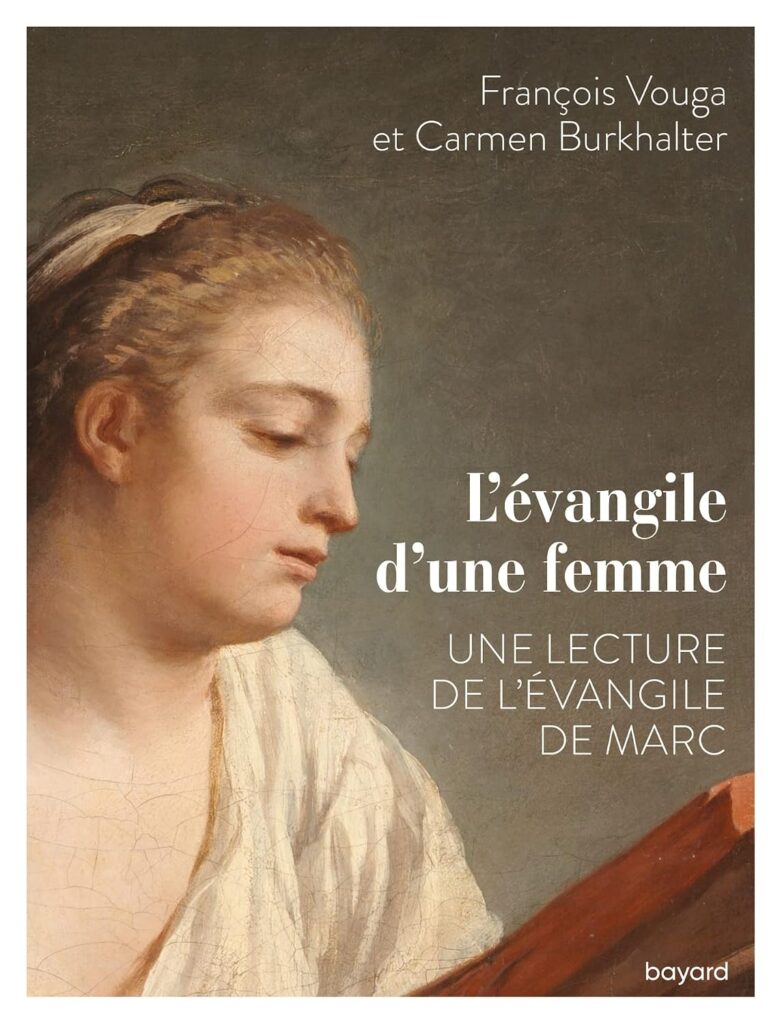
The text that we call “Gospel of Mark” is basically anonymous; the name “Mark” is inscribed on the cover of the oldest codices (4th century) but there is no reliable information about this man.
This is the First Gospel, chronologically speaking. Therefore, the author(s) took on a great responsibility in choosing and arranging the material about Jesus that they received as oral or written memories. Moreover, Markan scholars agree that the editorial hand is pretty heavy. There are clear intentions behind the narrative; the literary game is to identify them.
At least three stories in the Gospel of Mark should make you jump out of your chair if you read them with an open mind while being mindful of their historical context. The first is the double healing of a woman with a hemorrhage and the daughter of Jairus. After the author has reported many healings by Jesus, this is the first time that the text explores in detail the feelings and the life-story of the people who get healed. It is a kind of zooming in.
The description of the existential angst of the woman who tried many doctors for twelve years and could not be healed — with terrible consequences also for her social life, as a menstruating woman was considered impure — is extremely poignant and delicate. The figure of the daughter of Jairus by contrast is evanescent, but it is said that she is twelve years old and apparently she is dead, until Jesus brings her back to her family. The number twelve, twice repeated, call to mind women’s fertility age in that culture.
In short, this double story presents to us the drama of women’s lives with their symbolic power (blood/life giving) and their social marginalization, an exclusion from life itself. Who, other than a woman, could put together such a story in the first century?
The second story regards the second trip outside of Israel that Jesus undertook. Many historians doubt that these two trips ever took place. But, according to the Gospel of Mark, during his second trip Jesus meets a pagan woman and enters into a discussion with her. Not only that, but she wins the argument. Jesus is often presented in the Gospels as engaging in diatribes.
This, however, is the only case in which he concedes to his adversary. It is a quite stunning episode, as Jesus adopts a rigorous male-centered approach to religion (in short: “Jews only”) and the woman takes a compassionate but strong female-centered position (in short: “Stop the bullshit”). By the way, saving the life of a teenage daughter is involved again. Would his male disciples have remembered this particular occasion and, most especially, would they have written it down? And why does the Gospel of Luke — who otherwise reports almost all of Mark — erase this story?
Finally, on the day of his arrest, a woman unexpectedly enters the house and anoints Jesus with a costly perfume. To the scandalized male disciples, Jesus says that she understands what they do not: She is doing what she can, anointing beforehand his body for the burial. The episode concludes with the stunning sentence: Wherever in the world the Gospel shall be announced, what she did will be remembered in her memory. Who is she?
Could she be implied in the authorship of the text itself? Was perhaps her granddaughter the one who authored the book?
Banner image: Biblical illustration of the Gospel of Mark Chapter 5, the healing of the hemorrhaging woman. Illustration by Biblical illustrations by Jim Padgett. Wikimedia Commons
Queries for Contemplation
Do you find your reading of the Gospels and other Christian texts influenced by your upbringing? What can you do to free yourself and the texts of the religion in which you were brought up from your personal history of interpretation?
Related Reading by Matthew Fox
Hildegard of Bingen, A Saint for Our Times: Unleashing Her Power in the 21st Century
Julian of Norwich: Wisdom in a Time of Pandemic–and Beyond
Audiobook (Digital): Julian of Norwich: Wisdom in a Time of Pandemic–and Beyond
Original Blessing: A Primer in Creation Spirituality
A Spirituality Named Compassion: Uniting Mystical Awareness with Social Justice
Wrestling with the Prophets: Essays on Creation Spirituality and Everyday Life

