
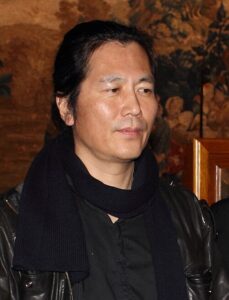
I am reading a very good book by philosopher Byung-Chul Han entitled The Disappearance of Rituals: A Topology of the Present. Originally written in German in 2019, it came to my attention only last week. I am glad that a philosopher dedicates attention to what, for me, has become a major interest, even though I am the kind of person who gathers people for ritual action, while he is interested mostly in a description/diagnosis.
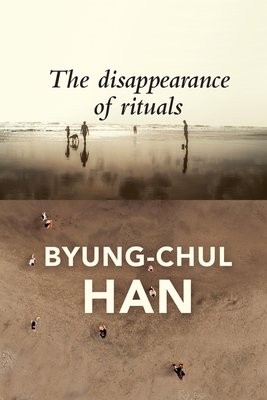
The first chapter of the book, “The Compulsion of Production,” opens with a marvelous statement: Rites create a community without communication, while today communication without community dominates. I agree wholeheartedly that ritual action does the magic, i.e. community building, in and of itself. True rituals don’t need many words, and surely don’t need to bother with what today is called “content.” In our society, however, we have plenty of communication and not a lot of community.
The genius of Byung-Chul Han’s analysis rests in identifying ritual as the missing piece, the absence of which both signifies and produces a society without community, an atomized society. The compulsion to produce and consume has deleterious effects on humanity at this time in its history. It willingly destroys the lastedness of things, thus creating instability.
I think of objects in the home which might have taken time and effort to acquire, and are cherished for their beauty, or for the the memories attached to them. Hanna Arendt, as quoted in this chapter, said that people, despite their always mutable nature, can find again their self by referring back to the same chair, the same table. All of this, and the notion of home itself, are in great danger at this time.
However, today not only objects are consumed and destroyed, but emotions as well, and even values. When we expose our lives on social media, they become emotional content for consumption. Even choosing to buy the products of an ethical company is tricky — in Han’s view —because then moral values get registered as part of one’s worth and narcissistic self-respect, that is, they are not anymore building a community, as they have done throughout human history.
The neoliberal regime produces a “de-homing” (Enthasung) through its forcing serial perception: the constant update, which has come to interest all the areas of life, does not allow for any lastedness or any closing. On the contrary, rituals make life stable; they make of the world a trustworthy place; they are in time what the home is in space. They make time
habitable like a home.
Rituals produce not objects to be consumed, but “in-homing” (Einhausung). How can they do that? How can they have so much power?
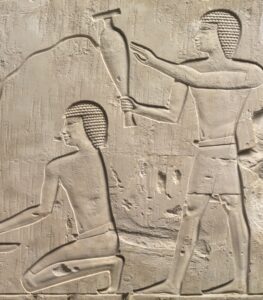
in Wikipedia.
The demise of symbols and the disapperance of rituals are, therefore, one and the same thing. But ritual has also always a form, an objective and traditional one. Byung-Chul Han makes reference to anthropologist Mary Douglas who, several years ago, was negatively surprised by the refusal of rituals she was observing in her own culture. It was to her something “mysterious” with ominous consequences. No doubt she was in a privileged position to notice that no humans except the modern Western have ever done something of this kind.
The revolt against formalism — which started decades ago and many of us perceived as a positive and progressive event — hid instead within itself a very bad seed. When the critique of formalism becomes the critique of form altogether, ritual is dismissed. Everything becomes subjective, and nothing keeps different people together — except perhaps bare needs or sheer force.
The first chapter of this book is much richer than I can summarize here—even though it is quite short — but let me at least close with a passage, which I consider a pure gem:
The process of narcissistic interiorization develops an hostility against form: objective forms are tossed away in favor of subjective circumstances. Rites elude narcissistic interiority; the ego libido cannot get attached to them because if it gives in to the rites, it must then leave itself aside. Rites produce a distance from self, a transcendence of self. They de-psychologize, they de-interiorize those who participate in them.
Byung-Chul Han talks about the disappearance of rites in society, not about their reappearance, being faithful to his role of attentive and deep observer. I must thank him, however, because he connects the dots for me and gives me clearer language to describe what I have been trying to do in life for almost as long as I can remember. The reappearance of rites is a very worthy cause to me, especially in these chaotic times.
Byung-Chul Han, The Disappearance of Ritual: A Topology of the Present. (Quotations are from the first chapter. GG says that his translation my differ from the published one.)
Banner image: “This photo was taken during the Mayan ceremony of Balche in Punta Laguna, Tulum, México.” Photo by Jimmy Salazar on Unsplash
Queries for Contemplation
Do you experience ritual as a source of stability and meaning? If not, what do you think is missing in the rituals you participate it, or what is it that you are missing?
Related Readings by Matthew Fox
Original Blessing: A Primer in Creation Spirituality
One River, Many Wells: Wisdom Springing from Global Faiths
Creativity: Where the Divine and Human Meet
Charles Burack, ed. Matthew Fox: Essential Writings on Creation Spirituality
Christian Mystics: 365 Readings & Meditations
Naming the Unnameable: 89 Wonderful and Useful Names for God…Including the Unnameable God

.jpg)
6 thoughts on “The Reappearance of Ritual”
Our consumerist societies are probably the most ritualized societies the world has ever known, but instead of community building and spiritually uplifting rituals, they foster isolating and spiritually asphyxiating rituals. “Rite” is etymologically synonym of “custom” and “religious” is a synonym of “bonding.” Addiction (like any obsessive-compulsive disorder) weaves a ritualized existence centered on behaviors that isolate and strengthen the ego rather than opening it or making it more porous as some (only some) religious rituals do. Carl Jung says it clearly in his 1961 reply to Bill W., co-founder of Alcoholic Anonymous, when he writes about an alcoholic patient: “His craving for alcohol was the equivalent, on a low level, of the spiritual thirst of our being for wholeness, expressed in medieval language: the union with God. […] I am strongly convinced that the evil principle prevailing in this world leads the unrecognized spiritual need into perdition if it is not counteracted either by real religious insight or by the protective wall of human community. An ordinary man, not protected by an action from above and isolated in society, cannot resist the power of evil, which is called very aptly the Devil. […] You see, ‘alcohol’ in Latin is spiritus, and you use the same word for the highest religious experience as well as for the most depraving poison. The helpful formula, therefore, is spiritus contra spiritum.”
Yes! My morning and evening rituals of contemplative prayers help me to be Open to the Sacredness of the Flow of the Present Moment in my daily life/Soul, especially the awareness of Divine Love~Wisdom~Life — Beauty, Joy, Compassion, Creativity… — within, through, and among Us, including All physical/nonphysical spiritual dimensions, in Our Loving Eternal Evolving Diverse Oneness….
I found this quote from your message very thought provoking.
“The revolt against formalism — which started decades ago and many of us perceived as a positive and progressive event — hid instead within itself a very bad seed. When the critique of formalism becomes the critique of form altogether, ritual is dismissed.”
What do we do then?
This is such a profound reflection. I have to sit with it, but what immediately came to my mind as I was reading was that it provides one way of looking at how the very traditional conservative part of the Catholic church is on to something with the adherence to rituals. But the rituals are not the entire point in themselves. If the ritual is perhaps one of the sacraments of the grace of community, the form of it seems to be used in this instance sometimes as a way of highlighting cracks in the community.
there is a lot more to think about here, and perhaps the book goes into this.
Narcissism needs to destroy thebeauty of the unspoken, the unthought known. Thanks GG for reminding us of the debths of the nature of truth.
Love, Gail🙏
My life has become a ritual. Every day is a chance to interact with and “play” with the Creator through the infinite ways it expresses itself in the world. Of course, there is formal ritual for emphasis and intention, especially on spiritually significant days when I know I am joining with the rest of us in our collective current.
But making a cup of tea is a ritual too. Reflecting on what is truly contained within that teacup is, for me, the heart of the ritual. It is realizing, with profound gratitude, everything that had to unfold for this single moment to exist.
The sun, the earth, the air, and the water. The pollinators. The plant, and its lineage reaching back to the first plant. The ancestral lineages of the farmer, the shopkeeper, and the artist who created the cup. My own ancestors, stretching back through countless generations. Billions of years of life unfolding from countless directions—every birth, every death, every choice, every chance encounter—so that this cup of tea could rest between my hands, and I could be here to receive it.
That awareness is the ritual.