
A very important sub-theme has emerged this week in my discussion of the theme of ritual. This theme is represented by the relations between the individual ego, the community, and the divine which take place in and through the ritual action.
My reading of Byung-Chul Han’s The Disappearance of Ritual has helped me understand better both Matthew Fox’s insistence on the Cosmic Mass as an enterprise of major relevance and his caution against the excess of psychology. Even though, when you read Matthew’s first writings, you see immediately that psychology was a formative force for his thinking, through C.G. Jung and especially Otto Rank (see this DM).
Han writes: Rites produce a distance from self, a transcendence of self. They de-psychologize, they de-interiorize those who participate in them. Does this mean that we should toss psychology away? That would be simplistic.
The point is that people who deal with psychology — as scholars, analysts, or clients — tend spontaneously to worry about their psyche, its makeup, its history, its shadow sides, and so on and so forth. Seldom is it clear at the outset that psychological work is intended first and foremost as an opening of the psyche to the cosmos and the divine — which is Jung’s intention, but not so well understood.

Real psychological health is not the health of the individual psyche taken by itself, but part and parcel of a global process of healing which includes one’s body and all bodies, one’s psyche and the anima mundi (the world’s soul). Focusing on oneself may have negative consequences; it may end up simply reinforcing the ego.
This is a complicated matter because sometimes the ego needs a boost — such as when people have been diminished by others — but we need to understand that a society in which everybody takes care of their own psyche is only apparently a wonderful thing — so much awareness and no violence anymore, the psychologists might think — while in reality it would be a dystopian reality. A bunch of individuals politely acknowledging each other, not a community.
I know this is controversial, so I ask that you bear with me. Of course I would like to be surrounded by mature people, but my claim is that such a goal cannot be reached solely by focusing on individual psyches, even many of them. Partly because it is not feasible, but even more deeply because the sum of healthy individuals does not make a healthy community. We think otherwise because we are deeply enmeshed in modern consciousness. Instead, we need ritual.
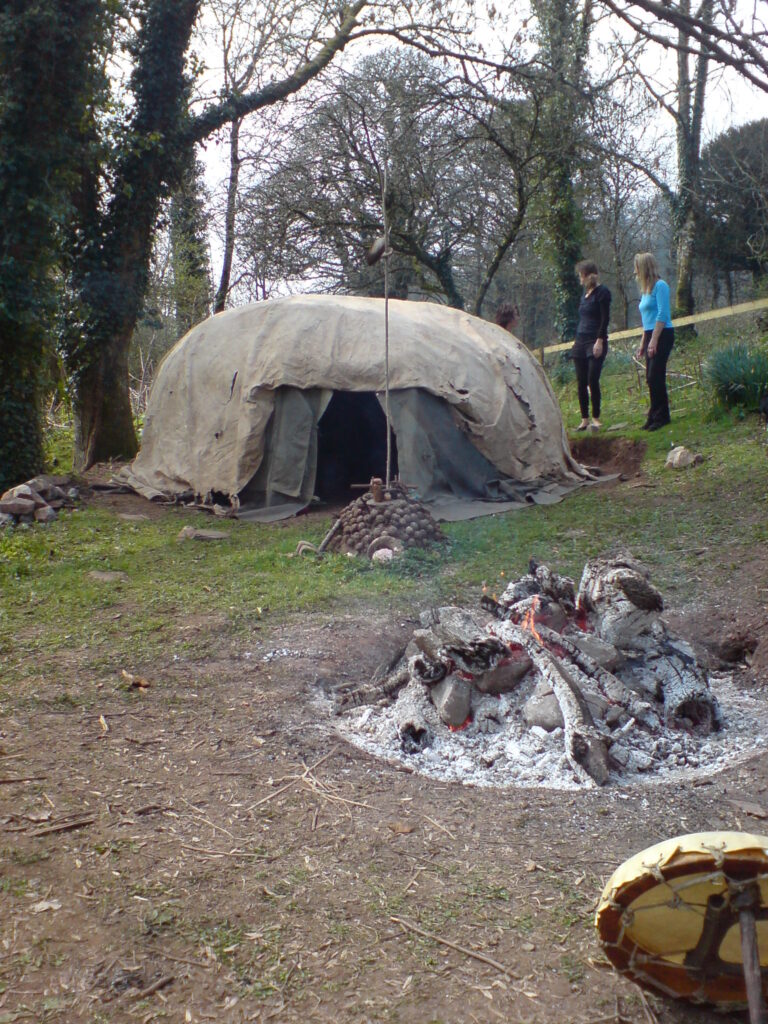
There needs to be a transcendence of self. We need to loosen up and lose our egos in worship and dance. Narcissism is checked at the door of a healthy ritual, while bad rituals are the ones in which people are either obsessed with being seen as leaders, or are obsessed with ritual perfectionism, which is a slightly hidden way of focusing on one’s ego (see yesterday’s DM).
The ego libido cannot get attached to rituals — writes Byung-Chul Han — because if it gives in to the rites, it must then leave itself aside. In this sense, participation in a true ritual makes for months or years of psychotherapy not because psychology is no help, but because there is nothing like a healthy ritual to sweep away many false pretenses of the ego.
All the chatter that goes inside one’s head — and invariably has to do with worries about oneself — is gone in a true ritual setting. Not forever, of course, but in a much deeper sense than people who do not have the experience can imagine. Regular ritual participation — when the rites are healthy and true — is a great therapy in itself.
Our Korean-German philosopher again is very helpful:
In ritual action are included feelings, but their subject is not the individual self as an isolated being. In funeral rites, grief represents an objective sentiment, a collective and impersonal one. Collective sentiments have nothing to do with individual psychology. In funeral rites, the community is the true subject of grief (…) But collective sentiments get formed ever more rarely. On the contrary, instincts and fleeting passions, typical of the isolated individual, sweep the stage.
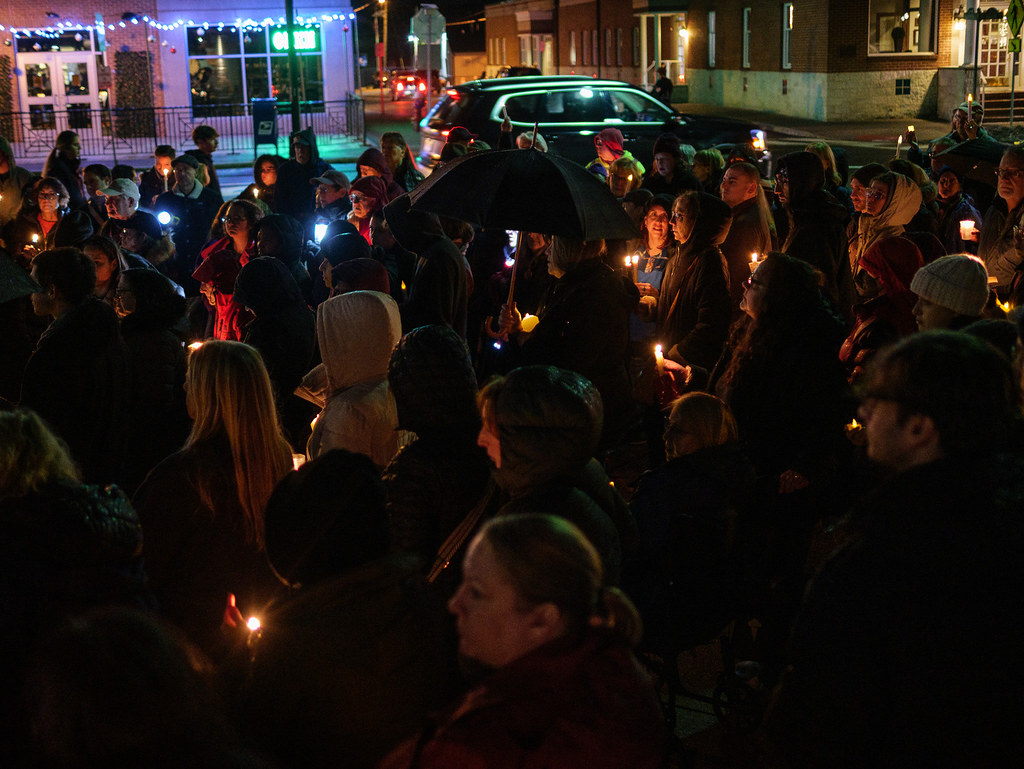
I agree, even as I find that individual feelings are involved in communal sentiments. They do get involved in ritual, and are actually healed. They do not form the substance of ritual, however, as in: Everybody bring in their piece, and then we toss a salad. Collective sentiments and feelings are true, just as the collective unconscious is true, but our atomized society can hardly see and honor them.
For all the reasons noted above, I am convinced that the Cosmic Mass — and especially its grief ritual — is one of the most important novelties on the spiritual map of the last few decades, even though it still needs to be recognized for its true potential.
Syung-Chul Han, The Disappearance of Ritual: A Topology of the Present. (Quotations are from the first chapter. GG says that his translation may differ from the published one.)
Banner Image: Carol Vacariello leads a grief ritual during the Via Negativa portion of a Cosmic Mass. From the Cosmic Mass mini-documentary video by Twenty Twenty Studios.
Queries for Contemplation
Do you have any experience of transcendence of self in ritual?
Related Readings by Matthew Fox
Charles Burack, ed., Matthew Fox: Essential Writings on Creation Spirituality
One River, Many Wells: Wisdom Springing from Global Faiths
WHEE! We, wee All the Way Home: A Guide to Sensual Prophetic Spirituality
Meister Eckhart: A Mystic Warrior for Our Time
Confessions: The Making of a Post-Denominational Priest
Sins of the Spirit, Blessings of the Flesh: Transforming Evil in Soul and Society
Creativity: Where the Divine and Human Meet
Creation Spirituality: Liberating Gifts for the Peoples of the Earth

5 thoughts on “Losing Oneself in Ritual”
The other night I watched the Netflix documentary “John of God: The Crimes of a Spiritual Healer. I watched in part because I bought into the hype about him and went to Brazil in hopes of healing. It happens that I experienced healing which had nothing to do with John of God, but I became immersed in the community that emerged to support his “ministry.” It was a fascinating experience of witnessing so many pilgrims. Some years after my visit it began to be revealed that he was a sexual predator. This documentary revealed the exposures and the Brazilian governments support of the women who spoke out, including John of God’s own daughter. As a survivor of childhood sexual abuse and activist in sexual abuse recovery, I was impressed by the Brazilian government’s response to the abuse reporters and I contrasted it with our own government’s lack of response to the allegations of the Epstein survivors. After viewing the documentary I went to church at an Episcopal church and chose to receive Communion on behalf of anyone who had been sexually abused. That prayer, ritually offered, allowed me to collapse and receive loving presence from others. I became humbly proud of the gift I offered and received in the moment. I appreciate your emphasis on ritual as healing and offer my simple story as validation of what you highlight. Thank you. Kay Kosinski-Duren, former student at ICCS.
Amen to rituals for less “I am” and more “We belong,” less “anima mea” and more “Anima Mundi,” less “that” and more “Thou.” This spiritually enhancing way of “losing oneself” must not be confused with the alternative (often ritualized) zillion ways of “losing oneself” in escapism. In his 2015 book “Disparaître de soi : Une tentation contemporaine” [disappearing from oneself: A contemporary temptation] French sociologist David Le Breton reviews the multiple ways in which individuals resort to ways of “losing oneself” by amnesia rather than by anamnesis.
Such an important series of meditations! The transcendence of the Modernity-self is, of course, a purpose of ritual. Ritual, to me, has always been about story. One might call story a psychology of the society or time. National parades, anthems, pledges of allegiance, prayers, holidays and holy days… they all embody in symbol, word, and movement, a story that shapes the self. There are, of course, many selves – personal, social, species, planetary, and now, we are awakening to our noosphere and cosmic selves. Yes, to the Cosmic Mass and to more rituals based in a wholistic and evolving story of Universe, Earth, Human, and Life as One. Yes, to rituals that contradict and transcend dualism, separation, and individualism. Yes, to rituals that reconnect, restore, and resurrect the One-Self.
With my co-author, Steven Martin, we offer Evolutionary Rituals and Practices for Everyday Emergence, available on Amazon. There are rites, ceremonies that tell the new story of oneness for New Beginnings, for Thresholds in the human journey, for Eco-Anxious Days, for Evolutionary Churches, for the Seasons, and there are Everyday Practices that help us ground the Self in the Great Self.
Thank you for this series of rich resources and conversations.
I wish we had a Cosmic Mass locally to participate with my sisters & brothers in person locally. However, my contemplative spiritual journey helps me to be open to the Sacredness of the Present Moment in the rituals of daily life by Being aware of the Loving Diverse Oneness with-in All ongoing Co-Creation, including All physical/nonphysical spiritual dimensions/beings, in Our Loving Evolving Diverse Oneness of Our Sacred Cosmos….
This series has really resonated with me because I’ve come to know what it means to lose myself in ritual. I don’t mean becoming emotionally overwhelmed. I mean those moments when my ordinary sense of self seems to fall away and something much deeper comes forward. It’s difficult to describe because words don’t quite reach it.
Over the last few years, ritual has become the place where I’ve watched something inside me slowly heal and come together. It feels less like I’ve accomplished this healing and more like I’ve gotten out of the way so that Love could do its work.
Sometimes, while praying the Psalms or taking part in sacred ritual, things happen that I can’t explain. There are moments when language comes that I never learned, or my body begins to shake as though I’m being carried by a Presence beyond my own will. I don’t really know what to make of those experiences, and I’m not interested in making claims about them. I only know they’ve left me more grounded, more compassionate, and far less convinced that my ego is who I really am.
Your reflections remind me that ritual isn’t just something we do. Sometimes it becomes a place where something happens to us. It’s not me who disappears in those moments, just the discovery of a deeper self that was there all along, hidden beneath all the striving and self-consciousness.