
We live in very troubled times. The more we are aware of this, the more we realize that we cannot count on external events to save us — including the election of a new pope. So after looking at holiness and evil last week, I have decided to look even more deeply into the roots of the problem, both in personal and social terms, with the help of one of Matthew Fox’s major works: Sins of the Spirit, Blessings of the Flesh.

After a strong criticism of the denigration of the flesh and the body which has been carried on for centuries by Christianity, and an underlining of what the Christian theologians from the 3rd to the 5th century already knew, that is, that sin is primarily originated in the mind, not in the body, the book turns into a daring exercise of deep ecumenism. The seven “deadly sins” (also called “vices”) of the Christian premodern tradition are revisited and compared to “roadblocks” in each of the seven chakras of the Indian tradition.
The comparison is helped by thinking of sin not as disobedience to norms, but as “misdirected love” — recovering the medieval understanding of sin championed by Thomas Aquinas. In short, the root of all issues with the human being is identified in those blocks of the correct flow of one’s inner energies and desires, which in turn becomes the problem with the human species. The opposite holds true as well: a social situation which dampens the vitality of some specific aspects of human life, may in time make it harder for the individual to keep clear from those specific blocks/sins.
The meaning of this exercise in deep ecumenism will become clear as I will expound on each of the seven issues. The point is similar to that of one of my daily meditations last week, when we looked at a list of ten “deadly sins” of our era. It’s truly an examination of conscience. Not for the purpose of condemning oneself, however, but for acquiring a better understanding of what needs change, and also how such change can be effected, or at least begun.

It seems to me that, as we realize more and more that we are engaging in resisting against evil for the long haul, we might as well get properly prepared. One of the obvious dangers, in fact, of any engagement of evil is that of projecting all the bad onto the other side and, consequently, all the good on our side. Another one, which we also discussed, is that of believing that we — or some hero in our stead —will conquer evil once and for all. These simple mistakes, which we make very often and inadvertently, can be avoided as long as we meditate more in depth on the human condition, which is everybody’s inheritance, including those we hate.
What is important to me before we start, is that we rewrite in our mind the meaning of “sin”— lest we don’t benefit at all from the exercise that Matt is proposing in his book and which I will summarize in the next seven daily meditations. Although “vice” is not a favorite word of mine either, it probably expresses better what a “deadly sin” or a “capital sin” is. In fact, we will not discuss so much bad actions and how they can be done in bad faith — or even in good faith — but what “habits of the mind” are engrained in us, and how certain unhealthy knots may be unraveled.
This approach is common to ancient Greek philosophy, to the Indian conception of the human being, and to medieval Christianity. In short, it is a premodern way of understanding humanity. There are differences, for sure, between those perspectives, but there are also many analogies. One thing that keeps them together is the notion that the human mind is not separate from nature, but also nature is not mere matter.
Our aliveness as human beings in concert with all other beings, all made of blessed flesh and ensouled with the divine spirit, is the capital point. What we need to overcome are the distortions introduced by the human mind. As Matthew writes: Carl Jung predicted that the age of Aquarius would be a time when evil would be on the table. We all know what it is. The moral issue would be whether we had the will to something about it.
Are we ready to make changes?
Quotation from Matthew Fox, Sins of the Spirit, Blessings of the Flesh: Transforming Evil in Soul and Society, p. 17.
See also Fox, The Tao of Thomas Aquinas: Fierce Wisdom for Hard Times.
And Fox, Original Blessing: A Primer in Creation Spirituality.
And Fox, Christian Mystics: 365 Readings & Meditations.
And Fox, Essential Writings on Creation Spirituality.
Banner Image: “Virtues and Vices,” a diorama at the Haw Par Villa, Singapore. Photo by Jnzl’s Photos. Wikimedia Commons.
Queries for Contemplation
What are the “habits of the mind” engrained in me that I deem unhealthy or unhelpful? (It will be interesting to see if the same list is valid at the end of the week).
Related Readings by Matthew Fox

Sins of the Spirit, Blessings of the Flesh: Transforming Evil in Soul and Society
Visionary theologian and best-selling author Matthew Fox offers a new theology of evil that fundamentally changes the traditional perception of good and evil and points the way to a more enlightened treatment of ourselves, one another, and all of nature. In comparing the Eastern tradition of the 7 chakras to the Western tradition of the 7 capital sins, Fox allows us to think creatively about our capacity for personal and institutional evil and what we can do about them.
“A scholarly masterpiece embodying a better vision and depth of perception far beyond the grasp of any one single science. A breath-taking analysis.” — Diarmuid O’Murchu, author of Quantum Theology: Spiritual Implications of the New Physics

The Tao of Thomas Aquinas: Fierce Wisdom for Hard Times
A stunning spiritual handbook drawn from the substantive teachings of Aquinas’ mystical/prophetic genius, offering a sublime roadmap for spirituality and action.
Foreword by Ilia Delio.
“What a wonderful book! Only Matt Fox could bring to life the wisdom and brilliance of Aquinas with so much creativity. The Tao of Thomas Aquinas is a masterpiece.”
–Caroline Myss, author of Anatomy of the Spirit
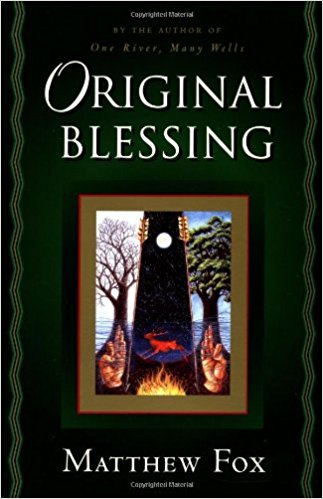
Original Blessing: A Primer in Creation Spirituality
Matthew Fox lays out a whole new direction for Christianity—a direction that is in fact very ancient and very grounded in Jewish thinking (the fact that Jesus was a Jew is often neglected by Christian theology): the Four Paths of Creation Spirituality, the Vias Positiva, Negativa, Creativa and Transformativa in an extended and deeply developed way.
“Original Blessing makes available to the Christian world and to the human community a radical cure for all dark and derogatory views of the natural world wherever these may have originated.” –Thomas Berry, author, The Dream of the Earth; The Great Work; co-author, The Universe Story

Christian Mystics: 365 Readings & Meditations
As Matthew Fox notes, when an aging Albert Einstein was asked if he had any regrets, he replied, “I wish I had read more of the mystics earlier in my life.” The 365 writings in Christian Mystics represent a wide-ranging sampling of these readings for modern-day seekers of all faiths — or no faith. The visionaries quoted range from Julian of Norwich to Martin Luther King, Jr., from Thomas Merton to Dorothee Soelle and Thomas Berry.
“Our world is in crisis, and we need road maps that can ground us in wisdom, inspire us to action, and help us gather our talents in service of compassion and justice. This revolutionary book does just that. Matthew Fox takes some of the most profound spiritual teachings of the West and translates them into practical daily mediations. Study and practice these teachings. Take what’s in this book and teach it to the youth because the new generation cannot afford to suffer the spirit and ethical illiteracy of the past.” — Adam Bucko, spiritual activist and co-founder of the Reciprocity Foundation for Homeless Youth.

Matthew Fox: Essential Writings on Creation Spirituality
Selected with an Introduction by Charles Burack
To encapsulate the life and work of Matthew Fox would be a daunting task for any save his colleague Dr. Charles Burack, who had the full cooperation of his subject. Fox has devoted 50 years to developing and teaching the tradition of Creation Spirituality and in doing so has reinvented forms of education and worship. His more than 40 books, translated into 78 languages, are inclusive of today’s science and world spiritual traditions and have awakened millions to the much neglected earth-based mystical tradition of the West. Essential Writings begins by exploring the influences on Fox’s life and spirituality, then presents selections from all Fox’s major works in 10 sections.
“The critical insights, the creative connections, the centrality of Matthew Fox’s writings and teaching are second to none for the radical renewal of Christianity.” ~~ Richard Rohr, OFM.


.jpg)
7 thoughts on “Changing the Habits of the Mind”
Thank you Gianluigi for your timely message. I was struck by the fact that there are 7 chakras and Thomas McEvilley’s comprehensive deep dive into the deep history of Greece and India. Biblical Christianity is tethered to the number 7 from beginning to end. Jesus said to forgive others not just 7 times, but 7×7 times……..
I look forward to your forthcoming seven meditations >>>>>>>
“Numbers in Biblical times were often symbolic of a deeper meaning and significance. The number seven is especially prominent in the Bible, appearing over 700 times. From the seven days of Creation to the many “sevens” in Revelation, the number seven connotes such concepts as completion and perfection, exoneration and healing, and the fulfillment of promises and oaths.”
https://www.christianity.com/wiki/bible/what-is-the-biblical-significance-of-the-number-7.html
As a four on the Enneagram, I too often judge myself against others and feel I “unfairly” come up short. I grew up in a family where I was almost taught to judge what others enjoyed against what I lacked, and it has been a lifetime struggle to set that aside. I am not interested in concrete “things” that others have; rather, I desire the successes or distinction that others have, for instance as playwrights. Lots of spiritual work, along with understanding that I am a “four” beset with of envy, is helping; but it requires continual work on myself.
We seem to be evolving from dual thinking to nonduality/unitive consciousness. This seems to be a spiritual evolution of becoming more aware of humankind’s multidimensional potentials of Being more conscious of Our Loving Diverse ONENESS with one another and All of ongoing Creation~Evolution of Our COSMOS… Mystics and saints in human history are forerunners of this human evolution, and more and more of humanity seem to be experiencing this transformation towards Compassionate Cosmic Consciousness, also called the 5th Dimensional Frequency… It has also been referred to as the evolution of our human species from Homo Sapien to Homo Luminous. Spiritually for people of Faith, we have Our Eternal Souls being guided and LOVED by Our SOURCE~CREATOR….
One of the “unhelpful habits of mind” I continually have to climb out of is the urge to hide, to stay safe in silence, to not “speak up and stick out” even when I have something important, even urgent, to say or do.
Raised by a judgmental, barely caring mother and an uninvolved father, I learned how to fade obediently into a shy, introverted background. And back then, girls were not given power or voice. The Church was entirely by and for males.
I was good at fading.
Even though I discovered that I was “a mystic” decades ago, and researched mysticism for decades since then, I kept hiding, waiting for someone ELSE, someone bold, to be “the Public Mystic,” to show up and start dispelling those rampant misconceptions about mysticism I kept reading everywhere.
Nobody else showed up,
But I got old (it happens), the pandemic proved viscerally that each day might be final (though we usually pretend otherwise)… and I finally told myself to JUST DO IT — preserve this information, start reaching out, and cautiously start risking being a vocal Female-Mystic rather than stay in safe but frustrated silence.
Also — the Spirit SHARES Mysticism, freely and generously, gifting it to the world in many religions, many voices.
Fear will not help it.
So I speak up, even though hiding feels safe and familiar.
Congrats!
Such a beautiful blend of different philosophies and approaches to understanding evil. Really enjoyed The Seven Deadly Sins image, such a great visual.
Thanks Magda.