
Last year I translated into Italian Matthew Fox’s book The Reinvention of Work: A New Vision of Livelihood for Our Time. My team and I chose this book among the ones not yet translated, as we were convinced that spirituality today can only make sense if it is deeply related to our everyday tasks and activities.

Yet the most relevant idea of the book was waiting for us! We discovered it only once we read it in earnest. The point is simple just as it is elusive: our own work can be part again of the Great Work of the universe. It all hinges around this. But what does it mean?
There is a true metanoia (mind/heart change) that is required to understand the book: leaving behind the equation between work and job that has been hammered into our minds.
In Italian, “work” can be translated as “lavoro” or as “opera”. Lavoro is obviously related to labor, and thus to the energy needed to perform a task; opera instead calls to mind the work of the artisan or the artist, and one can also say things such as “l’opera della vita” (the work of life) — it does not mean “lyric opera” in this context! Thus, in several pertinent cases, I translated “work” with “opera” but at other times with “lavoro.” My translation choice — which goes against the rule of translating one word with one word only — made the book immediately understandable.

What did we understand? That activity is no less sacred than contemplation, that all we do we can perceive and/or reconfigure as the work of our life, and that only by leaving behind any mechanistic understanding of ourselves and our work/job/task, and choosing instead the green (sheen) way of being (see yesterday’s DM), we can make sense of the call to attune our work to the work of the Universe.
I started thinking again about these matters in connection to the feelings of frustration that are so present among people today. I feel frustration too, but much less than in the past. I believe that I finally made the shift: once I have internalized that my task in life is that of attuning all my actions to the Great Work, not only do I have more energy to help causes that are not directly related to my job, but it matters less whether my actions are successful.
Not because success does not matter! That is a kind of spirituality that I reject. The successful completion of an activity brings joy, and rightly so. But I have no time to weep over failures if I am focusing on attuning my next action to the Great Work.

The book goes into some real depth, exploring especially the via negativa of work as a condition to access the via creativa of work. Thus, it is not a simplistic call to “follow your heart no matter the circumstances.” It does make good use of mystics and poets from different traditions, such as Meister Eckhart, the Tao Te Ching, Rumi, and R. M. Rilke, which help enormously in understanding the vastness and the profundity of what it means to work as a human being.
It seems especially important to me at this time, when we may feel impotent in our social action, when jobs are changing so rapidly, and when the threats to livelihood are more intense and real than ever, that we take into our hands again this book by Matthew, which is perhaps less known but is not a minor book at all.
Ironically, my most profound revelations have not occurred at specific sacred sites, but rather they have surfaced as a realization of what it is that I am doing (C. Milne).
Quote from photographer Courtney Milne in Matthew Fox, The Reinvention of Work, p.208.
Also see Fox, Original Blessing: A Primer in Creation Spirituality
And Fox, Meister Eckhart: Mystic-Warrior For Our Time
See also Fox, A Way to God: Thomas Merton’s Creation Spirituality Journey
And Fox, Christian Mystics: 365 Readings & Meditations
,
Banner Image: Called by the bells to prayer throughout the work day: “The Angelus,” by Jean-François Millet. Wikimedia Commons.
Queries for Contemplation
How often do I realize that what I am doing is attuned, or not, to the Great Work?
Related Readings by Matthew Fox

The Reinvention of Work: A New Vision of Livelihood For Our Time
Thomas Aquinas said, “To live well is to work well,” and in this bold call for the revitalization of daily work, Fox shares his vision of a world where our personal and professional lives are celebrated in harmony–a world where the self is not sacrificed for a job but is sanctified by authentic “soul work.”
“Fox approaches the level of poetry in describing the reciprocity that must be present between one’s inner and outer work…[A]n important road map to social change.” ~~ National Catholic Reporter
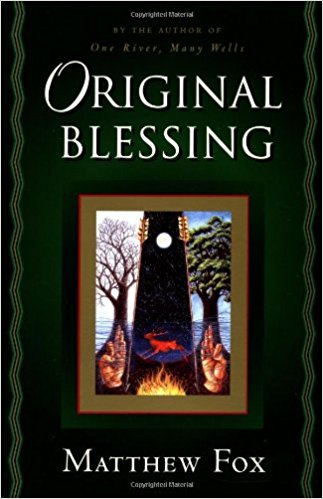
Original Blessing: A Primer in Creation Spirituality
Matthew Fox lays out a whole new direction for Christianity—a direction that is in fact very ancient and very grounded in Jewish thinking (the fact that Jesus was a Jew is often neglected by Christian theology): the Four Paths of Creation Spirituality, the Vias Positiva, Negativa, Creativa and Transformativa in an extended and deeply developed way.
“Original Blessing makes available to the Christian world and to the human community a radical cure for all dark and derogatory views of the natural world wherever these may have originated.” –Thomas Berry, author, The Dream of the Earth; The Great Work; co-author, The Universe Story
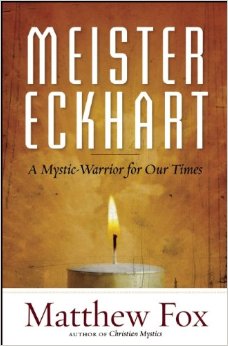
Meister Eckhart: A Mystic-Warrior For Our Time
While Matthew Fox recognizes that Meister Eckhart has influenced thinkers throughout history, he also wants to introduce Eckhart to today’s activists addressing contemporary crises. Toward that end, Fox creates dialogues between Eckhart and Carl Jung, Thich Nhat Hanh, Rabbi Heschel, Black Elk, Karl Marx, Rumi, Adrienne Rich, Dorothee Soelle, David Korten, Anita Roddick, Lily Yeh, M.C. Richards, and many others.
“Matthew Fox is perhaps the greatest writer on Meister Eckhart that has ever existed. (He) has successfully bridged a gap between Eckhart as a shamanistic personality and Eckhart as a post-modern mentor to the Inter-faith movement, to reveal just how cosmic Eckhart really is, and how remarkably relevant to today’s religious crisis! ” — Steven Herrmann, Author of Spiritual Democracy: The Wisdom of Early American Visionaries for the Journey Forward

A Way to God: Thomas Merton’s Creation Spirituality Journey
In A Way to God, Fox explores Merton’s pioneering work in interfaith, his essential teachings on mixing contemplation and action, and how the vision of Meister Eckhart profoundly influenced Merton in what Fox calls his Creation Spirituality journey.
“This wise and marvelous book will profoundly inspire all those who love Merton and want to know him more deeply.” — Andrew Harvey, author of The Hope: A Guide to Sacred Activism

Christian Mystics: 365 Readings & Meditations
As Matthew Fox notes, when an aging Albert Einstein was asked if he had any regrets, he replied, “I wish I had read more of the mystics earlier in my life.” The 365 writings in Christian Mystics represent a wide-ranging sampling of these readings for modern-day seekers of all faiths — or no faith. The visionaries quoted range from Julian of Norwich to Martin Luther King, Jr., from Thomas Merton to Dorothee Soelle and Thomas Berry.
“Our world is in crisis, and we need road maps that can ground us in wisdom, inspire us to action, and help us gather our talents in service of compassion and justice. This revolutionary book does just that. Matthew Fox takes some of the most profound spiritual teachings of the West and translates them into practical daily mediations. Study and practice these teachings. Take what’s in this book and teach it to the youth because the new generation cannot afford to suffer the spirit and ethical illiteracy of the past.” — Adam Bucko, spiritual activist and co-founder of the Reciprocity Foundation for Homeless Youth.

_Vermeer_-_Christ_in_the_House_of_Martha_and_Mary_-_Google_Art_Project.jpg)

6 thoughts on “Attuning to the Great Work”
Thank you Gianluigi for dissecting the multifaceted meaning of “WORK.” When I translated Thomas Berry’s book titled “The Great Work” into French, I had to decide how the title would be best translated. “The Great Work,” in French, is “Le Grand Oeuvre” (Magnum Opus), the alchemical achievement leading to the philosophers’ stone, while “le chef-d’œuvre” is a “masterpiece,” an outstanding accomplishment. Michelangelo’s David and Dante’s Divine Comedy are two chefs-d’œuvre. At the level of daily human activity, a masterpiece requires hard work (physical, mental, spiritual) and is, therefore, associated with a “task” and a “labour.” The French word “labour” means “plowing” and points to the necessary hard work of partaking in the Great Work of growth and ripening. As you put it: “Once I have internalized that my task in life is that of attuning all my actions to the Great Work, not only do I have more energy to help causes that are not directly related to my job, but it matters less whether my actions are successful.” Since Thomas Berry’s writings, especially “The Great Work” [New York: Bell Tower, 1999] outline the crucial ecological task ahead to live in harmony with the Great Cosmic Work on a masterpiece called “The Earth,” I translated “The Great Work” as “La noble Tâche,” “the Noble Task” (soon to be published).
My understanding of The Great Work is what happens every Sacred Living Moment of Our spiritual journeys when We’re aware/conscious of Being~Becoming ETERNAL SOULS/Energetic Spirits of Our Diverse Wholeness/ONENESS with-in Our SOURCE~CO-CREATOR’S SPIRIT of DIVINE LOVE~WISDOM… , which includes Our Sacred interconnectedness/interrelationship with one another, with Beautiful Sacred Mother Earth/Her living creatures/Her graceful abundance, with Our Sacred evolving multiverse Cosmos, and with All Sacred physical/nonphysical spiritual dimensions and living Beings of the Eternal Angelic Realms… COMPASSIONATE COSMIC CHRIST/BUDDHA CONSCIOUSNESS….
Thank you for today’s posting and your reflections on work and our interwoven connection to the continuous activity of creation.
I observe this reality of the power of our profound actions of “The Great Work” in my community of women who support, give, and care for friends, family and our environment and jobs. Most of this is taken for granted by society which still continues to be quite dismissive of women — this has come from all sectors of society, quite often in religious organizations.
This powerful female thread of co-creation has been since the beginning of mankind, unlabeled or woven into a story, or lauded by a dismissive society, but there, always there.
Good morning, I was blessed when I read your comment. Thank you for being my voice today. Pat Ferrari
All of life should be a prayer, according to Benedict. You, of course, know what ora and labora means. I am not Catholic and had to google it. Work and prayer are not separate actions. I try to follow Brother Lawrence, whose every action was a prayer devoted to God, and I try to pay attention to even my most mundane tasks and be grateful. Each “little” work points to the Great Work and becomes a part of it.
I love that you translated the English word “work” in two different ways, as you say here: “Thus, in several pertinent cases, I translated “work” with “opera” but at other times with “lavoro.” My translation choice — which goes against the rule of translating one word with one word only — made the book immediately understandable.”
Knowing another language, or several languages, allows us to see things differently. There are things I can say in Spanish that I can’t say in English. Using only English, when someone asks me about my “work” as a playwright, I don’t quite have the words to explain it. It appears I could do better in Italian. (btw: This site doesn’t save my name, email, etc. I have to type it in every time I comment. Is that fixable?)