
Last week on August 22 — which for Roman Catholics is the feast of Mary Queen of Peace — Pope Leo presided over a solemn day of fasting and prayer. His words unfortunately let people believe that there is a God who can miraculously stop wars — and famines, and droughts, etc. — but He does not, unless there is a sufficient number of people who pray to Him with fervor. The pope’s thinking must be more sophisticated than that but — for whatever reason — this is what is being fed to the masses over and over again.
Last week, I offered a definition of prayer as openness to life (see DM August 20). One reader wrote to me privately to express her unhappiness with such a definition. The gist of her argument was that prayer changes reality but I seemingly ignored this important fact.
The interesting aspect of her comment for me is that she does not seem to hold any theistic belief. In her view — as I understand it — prayer changes reality not because there is a God who waits to hear supplications before intervening into reality and changing it, but because the world is made of subtle energetic fields which communicate with each other.
Obviously, this changes the game.
To clarify, I did not mean to say that prayers of request are bad or cannot be effective. What I wanted to say is that all prayer — of whatever kind — should be placed in the context of calm attention. And that prayer should not be reduced solely to prayers of request. Prayer is also thanksgiving, contemplation, lament, and many other things.
Those who believe that asking for things — or asking for things to be changed — is all that prayer is, cut themself off a myriad of existential possibilities. I am sure that this is not the case with my reader, but it is the case for many people I know.

Back to the point, however, it should be noticed that the debate about the meaning or relevance of prayers of request is not a modern one. This can be seen — for example — in a close reading of the Gospel of Luke, which includes several instructions on prayer, ostensibly offered by Jesus himself.
The Gospel of Luke insists that people should offer supplications to God, especially in cases of injustice. Insisting relentlessly in prayer, to the point of being obnoxious, is praised as a virtue (Lk 11:5-8 and 18:1-8). The same text, however, modifies an ancient tradition about the words of Jesus. The Gospel of Matthew states that to those who insist, God will give “good things” (Mt 7:11), but Luke says instead that to those people God will give “the Holy Spirit” (Lk 11:13).
There is no question that the Holy Spirit is rather a good thing but it is also not a thing. That is, what happens if you ask for some bad realities to be changed and what you get back is the Holy Spirit? Luke is very conscious throughout his Gospel that the Holy Spirit is the fiery energy that shines from prophets (Lk 4:18).

There is little doubt in my mind that Luke with his Gospel entered a heated debate about the effects of prayers of request and decided to make things even more intense by saying: Yes, make supplications like mad people / No, don’t expect God to intervene except through you.
The Lukan message — in other words — is that you ought to pray intensely in order to become a prophet. Nothing more, nothing less. We don’t have any direct record about how people responded to this quite radical position when it was made known, but of course it did not resolve all the issues.
As Westerners, we are going through a paradigm shift, leaving a materialistic worldview and moving toward an understanding of reality in which mental energies are not confined within our skulls. Our understanding of the Divine has changed and will change. Thus, we’ll have even more debates to hold on the meaning and effectiveness of all kinds of prayer in the next few centuries, if we survive our propensity for self-destruction.
See Matthew Fox, Prayer: A Radical Response to Life
Also see Fox, A Spirituality Named Compassion: Uniting Mystical Awareness with Social Justice
And Fox, One River, Many Wells: Wisdom Springing from Global Faiths
And Fox, Original Blessing: A Primer in Creation Spirituality
And Fox, Natural Grace: Dialogues on creation, darkness, and the soul in spirituality and science
And Fox, Naming the Unnameable: 89 Wonderful and Useful Names for God…Including the Unnameable God
Banner Image: Prayer in action: marchers in a 2018 march in St. Paul, MN, say that politicians offering thoughts and prayers after shootings is not enough, and demand that lawmakers take action on gun law reform. Seven years later — August 27, 2025 — and eleven miles away in Minneapolis, when two children were killed and 17 people wounded by a shooter at a church, Congress and the White House sent prayers. Photo by Fibonacci Blue on Flickr.
Queries for Contemplation
What is your experience with prayers of requests and/or supplications?
Related Readings by Matthew Fox

Prayer: A Radical Response to Life
How do prayer and mysticism relate to the struggle for social and ecological justice? Fox defines prayer as a radical response to life that includes our “Yes” to life (mysticism) and our “No” to forces that combat life (prophecy). How do we define adult prayer? And how—if at all—do prayer and mysticism relate to the struggle for social and ecological justice? One of Matthew Fox’s earliest books, originally published under the title On Becoming a Musical, Mystical Bear: Spirituality American Style, Prayer introduces a mystical/prophetic spirituality and a mature conception of how to pray. Called a “classic” when it first appeared, it lays out the difference between the creation spirituality tradition and the fall/redemption tradition that has so dominated Western theology since Augustine. A practical and theoretical book, it lays the groundwork for Fox’s later works. “One of the finest books I have read on contemporary spirituality.” – Rabbi Sholom A. Singer

A Spirituality Named Compassion: Uniting Mystical Awareness with Social Justice
In A Spirituality Named Compassion, Matthew Fox delivers a profound exploration of the meaning and practice of compassion. Establishing a spirituality for the future that promises personal, social, and global healing, Fox marries mysticism with social justice, leading the way toward a gentler and more ecological spirituality and an acceptance of our interdependence which is the substratum of all compassionate activity.
“Well worth our deepest consideration…Puts compassion into its proper focus after centuries of neglect.” –The Catholic Register

One River, Many Wells: Wisdom Springing from Global Faiths
Matthew Fox calls on all the world traditions for their wisdom and their inspiration in a work that is far more than a list of theological position papers but a new way to pray—to meditate in a global spiritual context on the wisdom all our traditions share. Fox chooses 18 themes that are foundational to any spirituality and demonstrates how all the world spiritual traditions offer wisdom about each.“Reading One River, Many Wells is like entering the rich silence of a masterfully directed retreat. As you read this text, you reflect, you pray, you embrace Divinity. Truly no words can fully express my respect and awe for this magnificent contribution to contemporary spirituality.” –Caroline Myss, author of Anatomy of the Spirit
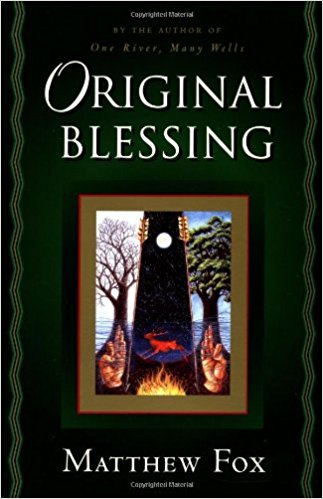
Original Blessing: A Primer in Creation Spirituality
Matthew Fox lays out a whole new direction for Christianity—a direction that is in fact very ancient and very grounded in Jewish thinking (the fact that Jesus was a Jew is often neglected by Christian theology): the Four Paths of Creation Spirituality, the Vias Positiva, Negativa, Creativa and Transformativa in an extended and deeply developed way.
“Original Blessing makes available to the Christian world and to the human community a radical cure for all dark and derogatory views of the natural world wherever these may have originated.” –Thomas Berry, author, The Dream of the Earth; The Great Work; co-author, The Universe Story

Natural Grace: Dialogues on Creation, Darkness, and the Soul in Spirituality and Science
by Matthew Fox and Rupert Sheldrake
Natural Grace, a 208 page inspired dialogue between theologian Matthew Fox and scientist Rupert Sheldrake, unites wisdom and knowledge from unconventional angles. Considering themselves heretics in their own fields, Matthew and Rupert engage the conversation from postmodern and post-postmodern perspectives, deconstructing both religion and science—while setting the foundation for a new emerging worldview. Having outgrown the paradigms in which they were raised, both Fox and Sheldrake see it as part of their life missions to share the natural synthesis of spirituality and science rooted in a paradigm of evolutionary cosmology.

Naming the Unnameable: 89 Wonderful and Useful Names for God …Including the Unnameable God
Too often, notions of God have been used as a means to control and to promote a narrow worldview. In Naming the Unnameable, renowned theologian and author Matthew Fox ignites our imaginations by offering a colorful range of Divine Names gathered from scientists and poets and mystics past and present, inviting us to always begin where true spirituality begins: from experience.
“This book is timely, important and admirably brief; it is also open ended—there are always more names to come, and none can exhaust God’s nature.” -Rupert Sheldrake, PhD, author of Science Set Free and The Presence of the Past

3 thoughts on “Supplications”
I pray that the minds and hearts of those responsible for war, killing, irresponsible behavior is changed as I pray my prayers of supplication.
My contemplative daily prayer of Faith, Hope, Trust, and Silence is that God’s Spirit of LOVE~WISDOM — Truth, Peace, Justice, Healing, Forgiveness, Strength, Transformation, Creativity, Beauty, Joy, Compassion, LOVING DIVERSE ONENESS… ALWAYS ETERNALLY PRESENT, continue growing in the hearts and lives of All Our Sisters & Brothers and All spiritual beings in All spiritual dimensions of Our evolving Creation~Cosmos and Spiritual Realms….
“Prayer, properly applied and understood, is the most potent instrument of action.” Mahatma Gandhi.
I use prayer daily, and have done so for 40 years. I also agree in large part with the person who communicated with you privately. The secret of prayer is Belief. When performed with conviction, truth, purpose and a full and composed heart, then indeed Alfred, Lord Tennyson was right when he said “More things are wrought by prayer than this world dreams of.”
We exist in Universal Oneness whereby ALL things are interconnected. Express your innermost yearnings and they will be met, although the motive does need to be pure. It is the Age of Miracles were we awake enough to realize it.