
I rejoice that a new book has appeared on my favorite psychologist, Otto Rank. In Otto Rank and the Creation of Modern Psychotherapy, Robert Kramer has done a superb job in bringing alive the major contributions Rank made to psychology, social work, and spirituality while alive and since his death in 1939.

To be transparent, I confess that I was given the honor of writing a Foreword to the book. Kramer and I taught a course together at the University of Creation Spirituality on Otto Rank several years ago and have worked together on several occasions since. He also invokes a chapter in my most recent book on Meister Eckhart, devoted to “Psychotherapy and the ‘Unio Mystica’: Meister Eckhart Meets Otto Rank.”
I was first introduced to Rank by Ernest Becker in his Pulitzer Prize-winning book, The Denial of Death, where he gives full credit to Rank for taking up that topic in depth. Becker’s mention that Rank’s book Art and Artist was the most important book of his life spurred me to read it, and I found it to be a profound study of spirituality as well as art. I wrote an extended review calling it “Otto Rank on the Artistic Journey as a Spiritual Journey, the Spiritual Journey as an Artistic Journey.”
Rank helped me to ground art as meditation and body prayers as spiritual practices in our creation spirituality pedagogy in schools and workshops over the years. It resonated deeply with the teachings of psychologists Naranjo and Ornstein, who named how “extrovert meditation” or “art as meditation” is “the way of the prophets.” Rank himself was a prophet from the Jewish tradition.

I became indebted to Rank for his brilliant insights on the meaning of soul through the ages and on creativity and on immortality, and the fear of death and compulsive immortality projects that result from that. And his honoring the artist (image of God) in all of us, and how neurosis derives from the artiste manque when our creativity is not honored and respected. Rank is richly present in my book on Creativity: Where the Divine and the Human Meet.
Rank, while not being a practicing Jew, was deeply Jewish in his worldview and his dedication to healing as part of the Jewish consciousness from which psychotherapy is derived.
Kramer demonstrates how deeply Rank influenced Rollo May and Carl Rogers and recalls how May, in his book The Cry for Myth, “extols Rank’s feminism,” pointing out how Rank regarded sexism and the prejudice against women as a “cultural disease.” Contrary to Freud’s theory of penis envy, “Rank believed that what motivates a woman is her ‘emotional and spiritual…craving for expression of her true woman-self in a masculine world which has no room or use for her.’”*
In a brilliant Epilogue to the book, Kramer talks about a “dying-centered” mysticism in contrast to a “creation-centered” mysticism. He cites Rank about how “self-hatred is the basis for hating others and the world at large”—the very basis of fascism, it seems to me, that is playing out in our time. Rank’s endorsement of “the marvel of creation” and what I call “a new falling in love with life” is the medicine from Rank and other creation-centered mystics and prophets.
Rank democratizes mysticism because he believes that in love and art we undergo a “potential restoration of a union with the Cosmos, which once existed and was then lost.”
*Robert Kramer, Otto Rank and the Creation of Modern Psychotherapy, Oxford University Press, 2025, p. 252.
See Matthew Fox, “Otto Rank on the Artistic Journey as a Spiritual Journey, the Spiritual Journey As an Artistic Journey,” in Fox, Wrestling with the Prophets, pp. 199-214.
And Fox, “Otto Rank as Mystic and Prophet in the Creation Spirituality Tradition,” exclusively on MatthewFox.org.
And Fox, “Psychotherapy and the ‘Unio Mystica’: Meister Eckhart Meets Otto Rank” in Fox, Meister Eckhart: A Mystic-Warrior for Our Times, pp. 139-156.
And Fox, Creativity: Where the Divine and the Human Meet.
And Fox, Sins of the Spirit, Blessings of the Flesh: Transforming Evil in Soul and Society.
And Fox, Original Blessing: A Primer on Creation Spirituality
Banner Image: “In love with creation.” Photo by Jametlene Reskp on Unsplash
Queries for Contemplation
Has Otto Rank been important to you and your development as both a mystic and a prophet? If not, it’s not too late to begin.
Related Readings by Matthew Fox

Wrestling with the Prophets: Essays on Creation Spirituality and Everyday Life
In one of his foundational works, Fox engages with some of history’s greatest mystics, philosophers, and prophets in profound and hard-hitting essays on such varied topics as Eco-Spirituality, AIDS, homosexuality, spiritual feminism, environmental revolution, Native American spirituality, Christian mysticism, Art and Spirituality, Art as Meditation, Interfaith or Deep Ecumenism and more.
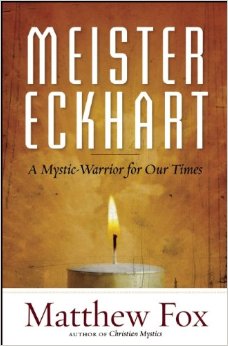
Meister Eckhart: A Mystic-Warrior For Our Time
While Matthew Fox recognizes that Meister Eckhart has influenced thinkers throughout history, he also wants to introduce Eckhart to today’s activists addressing contemporary crises. Toward that end, Fox creates dialogues between Eckhart and Carl Jung, Thich Nhat Hanh, Rabbi Heschel, Black Elk, Karl Marx, Rumi, Adrienne Rich, Dorothee Soelle, David Korten, Anita Roddick, Lily Yeh, M.C. Richards, and many others.
“Matthew Fox is perhaps the greatest writer on Meister Eckhart that has ever existed. (He) has successfully bridged a gap between Eckhart as a shamanistic personality and Eckhart as a post-modern mentor to the Inter-faith movement, to reveal just how cosmic Eckhart really is, and how remarkably relevant to today’s religious crisis! ” — Steven Herrmann, Author of Spiritual Democracy: The Wisdom of Early American Visionaries for the Journey Forward
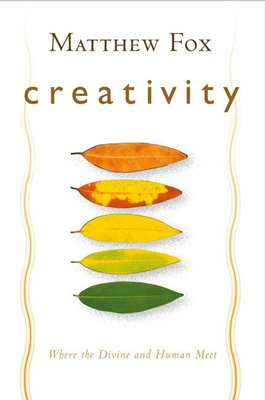
Creativity: Where the Divine and Human Meet
Because creativity is the key to both our genius and beauty as a species but also to our capacity for evil, we need to teach creativity and to teach ways of steering this God-like power in directions that promote love of life (biophilia) and not love of death (necrophilia). Pushing well beyond the bounds of conventional Christian doctrine, Fox’s focus on creativity attempts nothing less than to shape a new ethic.
“Matt Fox is a pilgrim who seeks a path into the church of tomorrow. Countless numbers will be happy to follow his lead.” –Bishop John Shelby Spong, author, Rescuing the Bible from Fundamentalism, Living in Sin

Sins of the Spirit, Blessings of the Flesh: Transforming Evil in Soul and Society
Visionary theologian and best-selling author Matthew Fox offers a new theology of evil that fundamentally changes the traditional perception of good and evil and points the way to a more enlightened treatment of ourselves, one another, and all of nature. In comparing the Eastern tradition of the 7 chakras to the Western tradition of the 7 capital sins, Fox allows us to think creatively about our capacity for personal and institutional evil and what we can do about them.
“A scholarly masterpiece embodying a better vision and depth of perception far beyond the grasp of any one single science. A breath-taking analysis.” — Diarmuid O’Murchu, author of Quantum Theology: Spiritual Implications of the New Physics
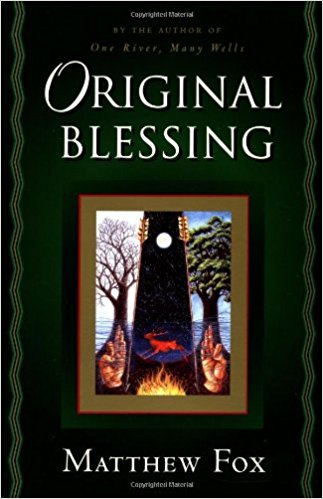
Original Blessing: A Primer in Creation Spirituality
Matthew Fox lays out a whole new direction for Christianity—a direction that is in fact very ancient and very grounded in Jewish thinking (the fact that Jesus was a Jew is often neglected by Christian theology): the Four Paths of Creation Spirituality, the Vias Positiva, Negativa, Creativa and Transformativa in an extended and deeply developed way.
“Original Blessing makes available to the Christian world and to the human community a radical cure for all dark and derogatory views of the natural world wherever these may have originated.” –Thomas Berry, author, The Dream of the Earth; The Great Work; co-author, The Universe Story

3 thoughts on “Celebrating a New Study on Otto Rank”
What prophet, whether dead or alive, did not get their inspiration from the Holy Spirit? We too can go to that same ‘deep well’ for our refreshment, without having to track down every visitor to it and patron of it. — BB.
Why is it then, that those who hate, especially the religious, seem to be thoroughly in love with themselves?
Carl Jung was more my inspiration to study the mystics and pursue a career as a psychotherapist. However, based on your continued study and appreciation of Otto Rank, including today’s DM, I’m sure Jung and Rank are ‘soul brothers’ in many ways in their studies and appreciation for the Soul in All of Us as part of the universal mystical traditions of the Presence of the Creative Flow of Loving Diverse ONENESS… I love the picture of both of these pioneer depth psychologists together in today’s DM. I look forward to reading Rank’s book, “Art and Artist,” and your review “Otto Rank on the Artistic Journey as a Spiritual Journey, the Spiritual Journey as an Artistic Journey.”