
Almost ten years ago, a book was published which perhaps did not get the
attention it deserves. It is titled Tantric Jesus: The Erotic Heart of Early
Christianity and was penned by James Reho, an Episcopal priest living in
Florida. In his preface to the book, Matthew Fox calls it an experiment in
Deep Ecumenism. This is a phrase that he coined to name a movement, the
movement that will unleash the wisdom of all world religions (see DM for
October 10, 2021).

Comparative religious studies, while bringing about a deeper respect for religious traditions other than one’s own, have remained quite dry and academic. Interfaith dialogue, intending to move beyond comparisons, has often remained quite polite and unwilling to break confines and mix identities. Important as both these efforts have been in the course of the 20th century, we now feel the urge for a step beyond.
Matthew praises James Reho because he has rendered himself vulnerable to the deep and nuanced wisdom of the East and because in returning to his own tradition, i.e. Christianity, he is able to see it with different eyes and is now demanding more in grappling with it. In other words, Reho is not stopping at the surface of things.

The most interesting point that Matthew makes in his preface is indeed that we wage battles between our faith traditions based on a superficial understanding of them. Rock on, Matthew! I could not agree more. Those religious people who are afraid of losing their identity might at times have good reasons — for example, when all religions are lumped together and with a vague moral sense — but most of the time are defending dogma simply because they have not penetrated the existential kernel of it.
On the contrary, because Reho cares deeply — I would say, immensely —about Jesus, and because he has immersed himself deeply in Tantrism, he commands our respect for the wisdom he has to share, which he calls Christian Tantra.
As with all Tantra, we are discussing a spiritual practice, or rather a practical science, as he calls it. This particular way, however, is Christian because Jesus becomes the great guru, rather than any contemporary human being.
In Christian Tantra, love becomes so much more than a notion, an ideology, or a superficial feeling. It is even more than an action, which empowers others — surely a good definition of Christian love in itself — because while it does that, it also enters into deep feeling, the kind of stable connection with the divine, which very likely was the substance of early Christian experience. Reho talks about the tantric nature of Christian spirituality, which is a very courageous way to name what he discovered, namely that “the Way” of early Christians was a school of love leading to divinization in this life. Not in the afterlife.
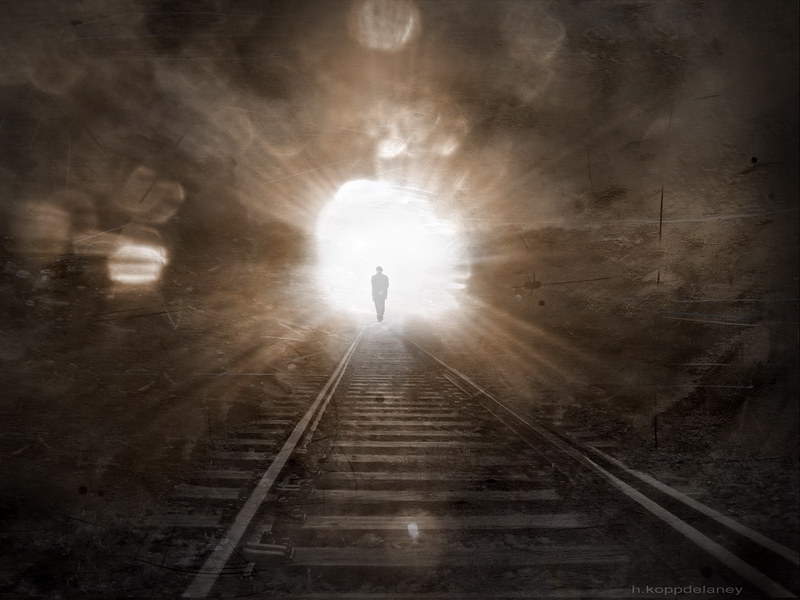
Christ then becomes not primarily an object for belief but a living presence, the uncreated light that fills and animates all creation. Christ is none other than our own deepest identity… When applied to ourselves, true Tantra teaches that it is not our ego or personality that becomes deified (thank God for that!), but rather the deeper who that we are, of whom we might not even have an inkling.
All of this might be familiar to the readers, but the book goes deeper in suggesting the practice of ancient Christian prayers reinterpreted through Tantra, as well as Tantric behaviors and rituals reinterpreted for Christian use. Among which shines, as one may expect, what Reho calls the sacrament of the bridal chamber. He does not shy away from anything, while he also approaches everything with the greatest respect.
Banner image: Detail of “Cósmico Cristo” by Ullrrich Javier Lemus. Used with permission.
Queries for Contemplation
What is your personal experience with Deep Ecumenism?
Related Readings by Matthew Fox
The Coming of the Cosmic Christ: The Healing of Mother Earth and the Birth of a Global Renaissance
One River, Many Wells: Wisdom Springing from Global Faiths
Original Blessing: A Primer in Creation Spirituality
A Spirituality Named Compassion: Uniting Mystical Awareness with Social Justice
Creation Spirituality: Liberating Gifts for the Peoples of the Earth
Charles Burack, ed., Matthew Fox: Essential Writings on Creation Spirituality

8 thoughts on “Tantric Jesus”
My experience of Deep Ecumenism is that it is still at the shallow end of Truth, but it is at least in the same pool.
My personal experience of Deep Ecumenism is a growing Faith and transformative openness to the Divine Presence of Love Light Life… within and among All of Us, all physical/nonphysical spiritual beings and dimensions, in Our ongoing evolving Co-Creation~Cosmos in Our Loving Diverse ONENESS….
Personally, I tend to avoid the catchy words that the West imports from eastern cultures and often reduces to commodities. Yoga, meaning “spiritual yoke,” has become a fashionable gymnastic, Zen, meaning “journey to the core” has become a synonym of “cool” and a brand name for soaps and perfumes, Tantra, evoking the weave of a fabric (and, by extension, of consciousness) has been cherry-picked into sexual practices, and so on and so forth. To some extent, the same has happened to the Middle East rooted Christianity, of which Marie-Madeleine Davy said that “before Constantine, being a Christian was a risk, after Constantine, it became a profession.” Of course there are genuine schools and practitioners of Yoga, Zen, Tantrism and Christianity in the West, but the tendency to water down just about everything (except greed) remains a characteristic of the West (rapidly spreading eastward).
After WWII, Karlfried Graf Dürckheim successfully developed and transmitted a form of Deep Ecumenism called Leibtherapie, a spiritual discipline that integrates Eastern and Eckhartian core elements. Without using the word “Tantra,” Dürckheim considered the body as indissociable from the spiritual Self. A key expression in his teachings is “the body one is” rather than “the body one has,” a concept that should be integral to the Christian belief in Incarnation.
Growing up in Arizona, I’ve always felt drawn to Native American spirituality. Discovering Celtic Christianity through John Philip Newell, which like Native American beliefs has roots and emphasis on the earth, has provided me a spiritual home that feels similar to native spirituality, but is related to my life’s journey as a Christian. Yet there’s more. A year ago, my Buddhist life partner and I attended teachings with the Shartze Monks who, when home, live in the Dalai Lama’s monastery. Since then, besides meditating and doing lectio divina with an online contemplative Christian group, most days I do Green Tara and Vajrasattva chants. I really don’t know if this is the right path for me, or if spending so much of my spiritual energy doing Buddhist chants is a good thing. I do know that the monks we studied with a year ago (and more briefly this April) are “the real thing.” Once again, as many times in my life, I’m trying to find my way. Am I diluting my Christian path by combining it with Buddhist practices? In these grievous times, I feel I need all the help I can get.
Not diluting. Expanding I think. I call myself a Christian Buddhist, Yogist, Tai Chi-ist, sufi, creation and Indigenous spirituality, vegetarian and animal loving environmentalist, lol. Like Matthew says, one river, many wells. I like all the compassionate wells.
Women have been sidelined and deliberately made to feel “less than” in MANY Christian sects. And yet Jesus welcomed Mary Magdalen to his inner teachings…
Jesus taught a somewhat secretive Mysticism in addition to his regular teachings, but he deliberately left a trail, which was then pretty blatantly headlined in the opening paragraphs of John. This Mysticism ran through the Old Testament, especially the First chapter of Genesis and the Divine Revelation of Moses. It was also examined by Plato and is in some of the Upanishads. It was picked up again by some of the Gnostics, Plotinus (who taught it extensively), early Christians (especially Eastern Orthodox, and also Meister Eckhart and St. John of the Cross), Hindus of various branches, the Sufi-Islamics, then again the Jewish kabbalists. It was pretty much lost in the Western Christian tradition after the Middle Ages, when the love of “logic” overtook the Church. People began to read ABOUT the findings of mystics rather than BECOME mystics. Then they forgot even that. But Mysticism was still practiced in the East.
The Mystical tradition runs through several religions, was affirmed by Jesus, and he honored women equally with men. If you wish to go deeper, learn what these various religions teach about Mysticism and how they differ.
And you can also read what I have to say about this Mysticism, if you wish. It’s in the comments section of the Archives.
“Tantric Jesus “ reminds me of the writings from the Irish (little known mystic John Moriarty) he wrote about a “Kundalini Mary “ in one of his books “Turtle was gone a long time ago” (a trilogy).. Moriarty was a poetic prophetic voice.
I have not read this book yet I have had tantric experiences. Some of these experiences happened in Assisi worshipping the Eucharist in a convent where St. Claire appeared. The experiences , I refer to as no hands tantra. It is always center through the heart and is ecstatic, putting it mildly. I always wondered about the moment when Jesus cast out the seven devils out of Mary Magdalene, that they were not devils but she was having a Kundalini initiation. These mysteries of the Sacred Heart have come through practice, yearning and a longing for the Divine Experience and ultimately grace.