
Jungian analyst and scholar of religion Antonio Dorella has offered such a convincing parallel between the four paths of Creation Spirituality and the four psychological functions of C.G. Jung that I took it as the basis of my own book on Matthew Fox and Jung. It is also possible to pair the paths and the functions with the four elements of traditional ancient physics. This is how it works:
| Path | Function | Element |
| Via Positiva | Sensation | Earth |
| Via Negativa | Feeling | Water |
| Via Creativa | Intuition | Air |
| Via Transformativa | Thinking | Fire |
Much can be said to explain why I believe the above scheme is correct — at this point, I could refer readers to my book, except that it has not yet been published in English!
The less obvious point of contact is perhaps the one between Via Transformativa, which is all about justice and social transformation, and Thinking, which is usually perceived as abstract. But that is just one of the mistakes of modernity. True Thinking is concrete, not in the sense that it shares the concreteness of Sensation, but in the sense that it plans ahead and intends to provoke change, either in the short term or in the long run. Not by chance, Jung identified as a typical “Thinking Type” the true politician who serves the community.

I am using this scheme as the basis of my practice as a spiritual counselor, together with the guidelines I gave in an earlier DM, in addition to other Creation Spirituality resources. I find this scheme useful because one of the main issues that needs to be worked out, as a fortifying strategy for the individual, is a contemporary version of the old adage “Know Thyself.” The primary point of Spiritual Counseling is not, in fact, giving “counsel,” but helping people to understand their own makeup, accepting it, and giving value to it. After which, all the issues that are presented in the sessions will be bathed a new light.
Therefore, this is something that I like to do at the very beginning of a counseling relationship, to start from the affirming, from the Via Positiva, rather than from the problems, from the Via Negativa.
I will never forget one afternoon several years ago, when I gathered in a garden in Tuscany with a handful of friends and Matthew himself. At one point, a Jungian analyst said that we must always begin with the Via Negativa, because if one does not begin from the deep unresolved issues and faces them straight on, no healing can happen, and one always stays at the surface. In response, Matthew — who is usually extremely poised — shouted: NO! We must ALWAYS start with the Via Positiva, otherwise people simply won’t have the energy to confront the Via Negativa, which of course must be tackled. That analyst never came back to our meetings. It happens.
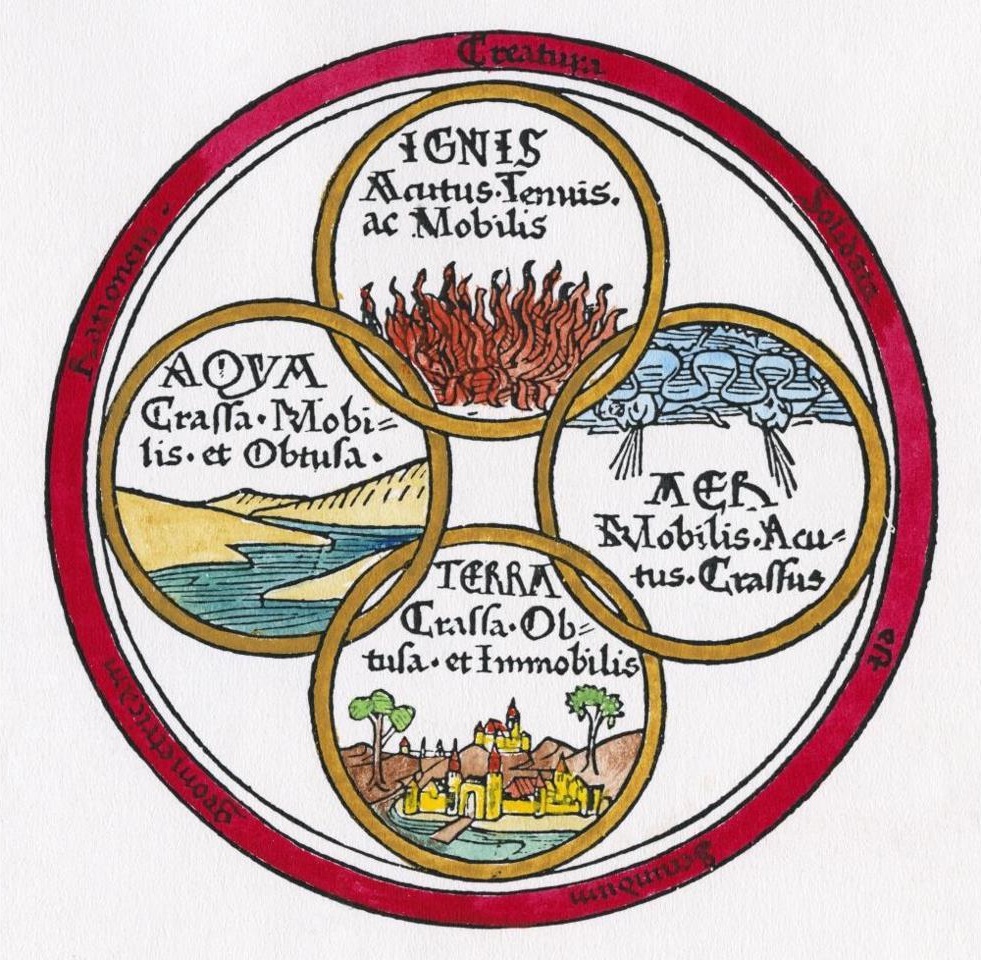
The point being that, especially today, any kind of counseling or therapy that does not reinforce a healthy sense of the ego is bound to fail. Knowing to what Type one belongs helps feeling connected to oneself, understanding others who belong to other types, and generally treating one’s perceived weaknesses more lightly, until they become the portal itself of deep personal change — such being the role of the “inferior function” in Jungian theory.
For example, I am mostly Air. I find myself most at ease when creating a curriculum, studying a piano piece, decorating houses. I have also played with Fire quite a lot, as my doctorate and my political engagement show. But that is always tinged or even controlled by the creative aspect. I am also psychologically active in Water, having, however, a much more troubled relationship with it, i.e., with feelings, than with thinking or intuition. Finally, I am quite bad at Earth. I have always failed at anything physical, at having a good relationship with my body, at sports, and even driving a nail in the wall is a challenge for me.
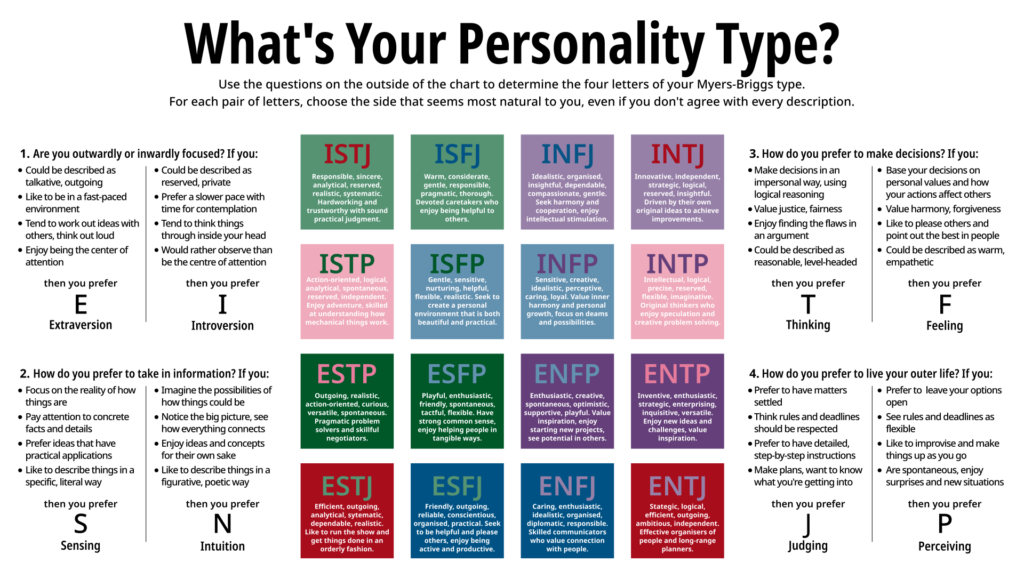
According to Jung, each of us has a primary function, two more or less developed side functions, and one inferior function — unless one has reached the complete ideal balance of individuation. Plus, each of us is either an extrovert or an introvert, mistakenly associated with being outgoing or shy, respectively. Knowing to which of the eight resulting Types you belong is usually a very good starting point.
The main differences between Spiritual Counseling, as I practice it today, and Jungian analysis can perhaps be summarized as follows:

- I focus more on the conscious self-understanding of the client than on the unconscious, even though it would be impossible to exclude dreams and archetypes from the work.
- I ask that the client bring to the work their spiritual and religious issues, including religious trauma, and I am an expert in those more than in anything else, even though, of course, all issues are related.
- I do regular sessions, but they are usually more distanced than an analyst does (almost never weekly, unless there is a particular reason).
As I said before, to me this is Good Work. It makes me feel alive. Which is why it makes my clients feel alive as well.
NOTE: You may contact Gianluigi to request a free 30-minutes exploratory session of Spiritual Counseling by writing directly to gianluigi@misticaevolutiva.it
Banner Image: A stylized marble eye, photographed in Buonconsiglio Castle in Trento. In the frame’s engraving is written “GNOTHI SAUTON” (Greek) “ID EST COGNOSCE TE IPSUM” (Latin). (“Know thyself” [Greek], “this is [means] know thyself” [Latin].) Wikimedia Commons.
Queries for Contemplation
Do you have any inklings as to your Type? Do you find useful or are you intrigued by what Gianluigi shared here?
Related Readings by Matthew Fox
The Reinvention of Work: A New Vision of Livelihood For Our Time
Original Blessing: A Primer in Creation Spirituality
Natural Grace: Dialogues on creation, darkness, and the soul in spirituality and science
A Spirituality Named Compassion: Uniting Mystical Awareness with Social Justice
The Tao of Thomas Aquinas: Fierce Wisdom for Hard Times
The Beloved Will Guide You: St. John of the Cross and the Triple Dark Night of Our Times
Julian of Norwich: Wisdom in a Time of Pandemic–and Beyond
A Way to God: Thomas Merton’s Creation Spirituality Journey


3 thoughts on “Know Thyself in Spiritual Counseling”
Jungian depth psychology is what inspired me to become a psychotherapist until 2015, when I retired. Intuitively, the archetype of the Self has drawn me to deepening my understanding of Our Divine Self/Spirit with-in All of Us, including All physical/nonphysical spiritual dimensions/beings, guiding Us towards Wholeness of Loving Diverse Oneness within Beautiful Sacred Mother Earth/Her living creatures/Her graceful abundance, and within Our ongoing evolving Co-Creation Cosmos in the Sacred Process of the Eternal Present Moment…
My spiritual journey continues, including my spiritual guidance ministry, with the personal and communal spiritual nourishment of three spiritual traditions: Contemplative, Creation, and Incarnational Spiritualities.
For those who might be interested in the subtle spiritual realms within and around us, I recommend studying and experiencing Incarnational Spirituality (lorian.org), and the introductory books of David Spangler: 1) “Journey into Fire” (2015), and 2) “Partnering with Spirit” (2024).
Dear Gianluigi, Buon giorno! Thank you for your teachings, always. I was inspired to reach out about today’s especially when you described Jung’s assessment of the functions. I couldn’t help but draw a parallel to the Enneagram. Are you familiar with it? Have you written about it? Father Richard Rohr is an expert on the Enneagram and currently has a special podcast about it. I’m quite new to it and increasingly intrigued by it as a very useful spiritual psychotherapeutic tool. “Turning wounds into wisdom” is how Fr. Rohr phrased it, I believe.
Peace & blessings,
Liza Jay Barbera
I am somewhat knowledgeable about the Enneagram, but as it does not easily fit with the Jungian typology, I have put aside for a while the attempts at reconciling the two. It is interesting in both cases that people begin to realize they are not less free because they have certain innate characteristics.