
Talking about hysteria, as well as about melancholy, can be a controversial issue because contemporary psychiatry does not use such terms anymore. Mostly for good reasons. The systematic century-long oppression of women through the pseudo-diagnosis of hysteria is a case in point. However, a deeper historical outlook should warn us from trusting uncritically whatever is the medical consensus of the time on mental distress.
Today, for example, the tendency to explain all mental pain as a chemical imbalance in the brain is excessive as it tends to exclude any other cause. I hope it is sufficient for the scope of this DM to state that I have no intention to denigrate current science and that my adoption of an older terminology has the aim of enlarging the view of psychological issues, not that of restricting it or subjecting it to some ideology.
Many of the public behaviors exhibited by Bernard of Clairvaux (see yesterday’s DM) would have him classified as an hysteric by many doctors of his time if he were a woman — in fact, even if the diagnosis of hysteria became very popular in the 19th century, its roots are ancient. The utterly violent expression that at times came out of his mouth and the irrational attitudes that he showed, for example in his hateful polemic against Abelard, would be a sufficient proof. Something within him got out of control quite easily and burst out in unpleasant ways.
But Bernard was also subjected to deep bouts of melancholy — as one can see in his writings — which is not at all uncommon in religious figures. Hysteric symptoms can in fact coexist with melancholic feelings, almost like the opposite sides of a coin. Also, it is not a given that people affected by one, or the other, or even both sets of symptoms, are unable to act effectively in the world. Sometimes, of course, they are.
As Donald Capps has shown in his masterful work Men, Religion, and Melancholia, some very important male figures who took the issue of God at heart with a fiery passion were melancholics. This brings me to reflect on the archetype of the Fisher King, presented in several different versions within the Arthurian cycle (12th century). This male figure, who could be a powerful individual because of his status as king and his job as protector of the Holy Grail, is in fact maimed in his masculinity by a wound to his genitals. Thus, he is unable to ride a horse, and he spends his time fishing, while his kingdom becomes a wasteland. He simply waits. In some versions, he waits for a knight who will restore him to health and wholeness, but in other versions he seems to have lost any hope.
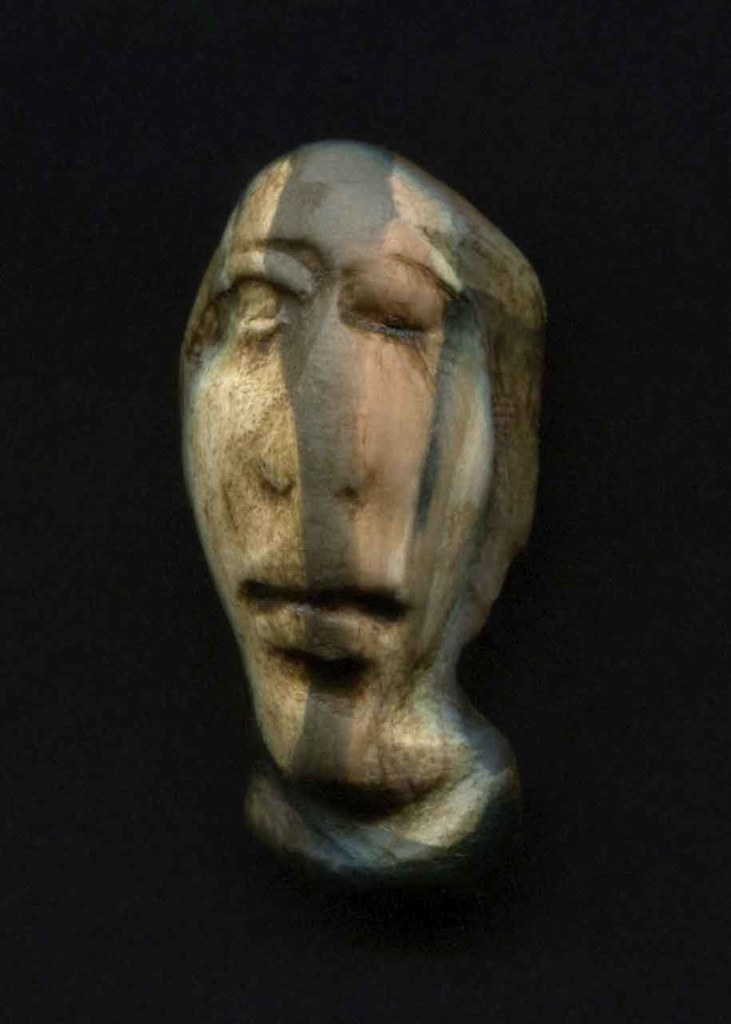
This representation of the melancholic man is very powerful and tragic. The crippling effects of melancholia it portends can be confined, however, to the extension of the melancholic crisis. For this reason, people may not realize for a long time the severity of the pain of the persons — especially but not exclusively men — who suffer from this condition. The myth as told in the Arthurian cycle also shows a deep connection to religion, as the Fisher King was the custodian of the Holy Grail and was wounded in his attempt to save it from disappearing.
Donald Capps offers a Freudian explanation for the condition that I find masterfully represented by the Fisher King myth. It is the “loss of the mother” that engenders in some boys a religious response, trying to relive the original wholeness of their archaic mother-son relationship in their actual lives through mystical experience. However, to place one’s bets on the unseen may at times prove unwise, as religious consolations are fleeting in nature; namely, they easily disappear, just like the Holy Grail. Capps suggests seeking “in the world of flesh and blood… the means and sources of consolation and compensation.”
I don’t support Capp’s conclusions entirely, but I find them worthy of further study. As a supporter of Creation Spirituality, I think, of course, that spirituality is not about fleeing this carnal world, but going deeper into it. Nevertheless, I know in my own experience how the loss (real or perceived) of the original love object is formative of the entire personality, and how the quest for the Holy Grail, the Divine object, can both sustain and wear out an entire life.
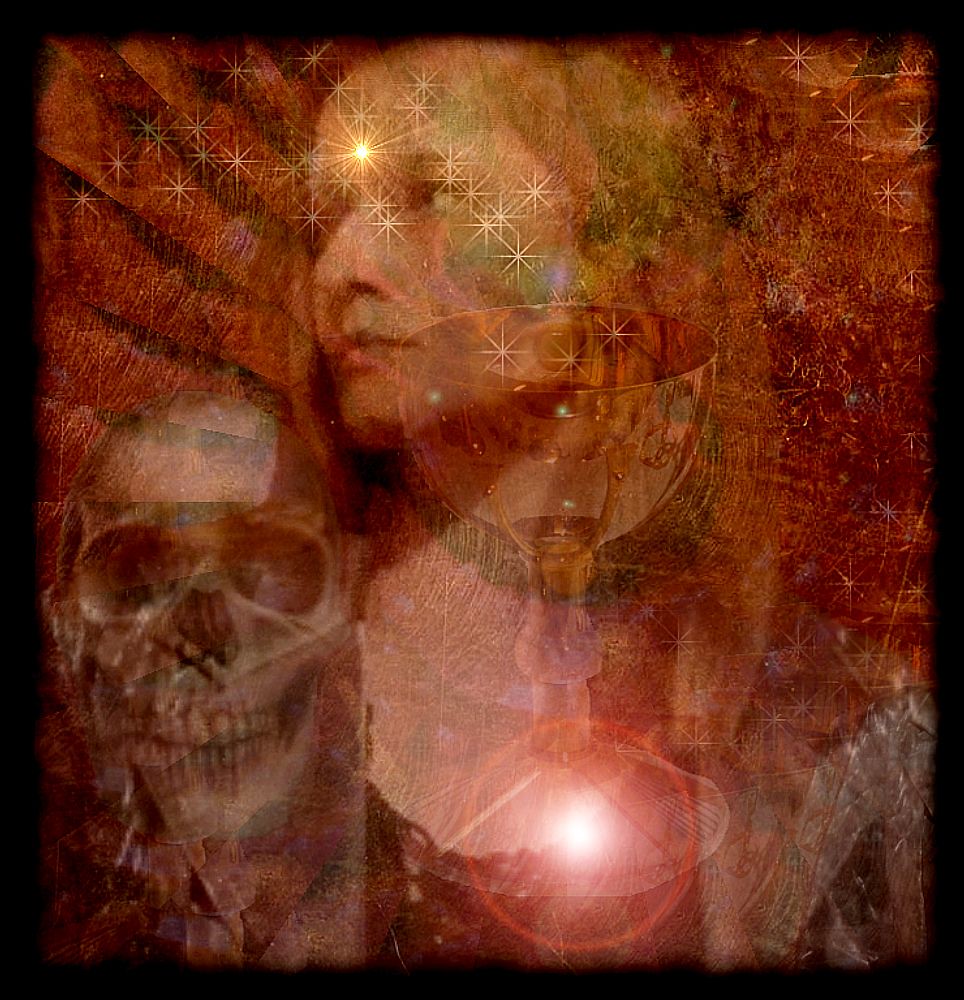
The Fisher King archetype, with its perennial wound and unending waiting, is not a healing archetype but rather a powerful representation of a condition in which many men find themselves, knowingly or unknowingly. Although their potential to rule over their kingdom in peace and prosperity, i.e., on their life, is not completely lost, it is, however, held captive by the archetype itself.
Moving from the Fisher King archetype to the Green Man archetype (see the August 3 DM) is a way to talk about the healing which men afflicted by melancholy badly need. Again, the integration of the feminine is the central point. The Holy Grail is a cup, the feminine symbol par excellence, containing deep feelings of compassion and love, while the spear with which the Fisher King was hurt is an obvious masculine symbol, even though it is sacred just as the Grail — in the legend, it is the tool which cut open Jesus’ breast on the cross. When the Holy Grail is lost, and men run after it, inner reconciliation is desperately sought, not achieved. Once the Sacred Object is returned to the King, and he embraces it fondly, and those feelings become part of him, only then can a man find peace.
Banner Image: “Perceval arrives at the Grail Castle to be greeted by the Fisher King.” Artist unknown, from a 1330 manuscript of Perceval ou Le Conte du Graal by Chrétien de Troyes. Wikimedia Commons. Public domain.
Queries for Contemplation
Do you know (religious) men who experience melancholia (i.e. deep sadness)?
Related Readings by Matthew Fox
The Hidden Spirituality of Men: Ten Metaphors to Awaken the Sacred Masculine
The Beloved Will Guide You: St. John of the Cross and the Triple Dark Night of Our Times
Meister Eckhart: A Mystic Warrior for Our Time
Charles Burack, ed., Matthew Fox: Essential Writings on Creation Spirituality
Sins of the Spirit, Blessings of the Flesh: Transforming Evil in Soul and Society
Matthew Fox, Skylar Wilson, Jen Listug, Order of the Sacred Earth: An Intergenerational Vision of Love and Action
A Spirituality Named Compassion: Uniting Mystical Awareness with Social Justice
Matthew Fox and Rupert Sheldrake, Natural Grace: Dialogues on creation, darkness, and the soul in spirituality and science


4 thoughts on “Melancholy in Men”
Without denying its potential chemical aspect (cause or effect ?), melancholia (from “melas” = dark) is like entrapment in a dark night of the soul (Via Negativa). In his book “Transforming Depression: Healing the Soul Through Creativity,” David H. Rosen, author of “The Tao of Jung,” shows that active imagination can relieve the deep emotional pain of depression. He convincingly demonstrates that “when people learn to confront the rich images and symbols that emerge from their struggles, they can turn their despair into a fountain of creative energy.” Such spiritual emergence is the answer to the Grail-releasing question, “What ails thee?” The fourfold spiritual journey of Creation Spirituality as well as the indivisible YinYang wholeness are implicit in this salutary U-turn.
Thank you GG for today’s very interesting DM on Melancholy in Men and the Fisher King archetype. I’m sure your book recommendation of Donald Capps’ book, “Men, Religion, and Melancholia,” is also a good one for further information on this important theme still relevant for understanding and trying to heal male woundedness and toxic patriarchy in human history. As I commented in yesterday’s DM, and as you and many spiritual teachers analyze and recommend, most men historically (ancestral spiritual healing) and currently need to heal the continued destructiveness on humanity and sacred earth of toxic patriarchy by integrating the Living Loving Divine Feminine Present within them on Our personal and communal Co-Creative spiritual journeys and Human evolution of Loving Diverse Oneness, along with Sacred Mother Earth and Cosmos, and collaboration with All physical/non-physical spiritual dimensions/Beings (lorian.org)…
Querido Gianluigi, I hope you and yer Braziliano are both very well! I have been reading your daily “letters” with much interest.
I felt today, as I reflected on the Fisher King in my body, that perhaps “he” can be present in this moment of increasing visibility of trans individuals ?
I am so grateful for these daily meditations. I find them engaging and I am learning from each one. I had heard the words “fisher king” but I never really knew what they meant until today.
I’ve read the DM a couple of times and this is the thought that comes. I’ve seen so many relationships between men and women turn from lovers to mother-child, especially after children are born. Meaning that the man turns into another child of the woman, and the relationship changes from a sexual one into a parent/child one.
I’ve always wondered about the mechanism behind this transformation, and I think the archetype of the fisher king, and your framing of it, help a bit. It’s as though the man has left his actual mother behind (lost his holy grail) when he leaves the home. This loss causes the melancholy (the wound) until he finds a wife and has children. Then, the man is restored with the comfort of a mother again. But a part of him remains wounded, having failed to attain his potential as “king”.
I love the idea of the green man as a medicine of sorts, enabling men to be their own holy grail of creation. It seems like these men would be able to avoid being “trapped” in the mother/child dynamic, and would have more spiritual freedom.
This is obviously oversimplified and not very well articulated and full of exceptions… Just the thoughts in my head at this moment as I learn and consider this archetype. Thanks for your grace.