
Medieval medicine — and ancient medicine through it — heavily influenced Hildegard of Bingen’s own medical and psychological knowledge. It is very interesting, however, to notice how she transformed and put into practice what she learned through books and her personal experience, creating a quite original body of psychosomatic medicine which has been, in fact, brought back as such to the public in the second half of the 20th century by two researchers/practitioners: Dr. Gottfried Hertzka (1913-1997) and Dr. Winghard Strehlow (1937).
In a fractured world like ours — in which even nearby academic disciplines do not communicate with one another — it is all the more interesting to observe how she integrated her medical and psychological knowledge with her spirituality, art, music, herbalism, mysticism, and theology. And — dare I say it? — her politics. Such a holistic view, which goes even beyond holistic medicine, is perhaps her major wake-up call to our society today.
Hildegard believed that people after the Fall — that is, people in their concrete existence — can be divided into four groups, based on what in naturopathy today is called their “terrain” or their natural build-up. To her, such a physiological base was at the same time psychological.
Hildegard defined health as the correct flowing in a person of all the four humors of classical medicine, symbolically connected with the four elements: black bile (spleen)/earth, cold foam (brain)/water, blood (heart)/air, and yellow bile (liver)/fire. She considered the individual as a microcosm replicating, ideally, on a smaller scale, the balance of the macrocosm, the universe.
The excessive production of one of the four humors leads to its dominance, thus to imbalance, and, practically speaking, to belonging to one of the four temperaments of classical medicine: melancholic, phlegmatic, sanguine, and choleric. However, Hildegard’s descriptions of these temperaments or psychological types are quite detailed and not merely traditional.
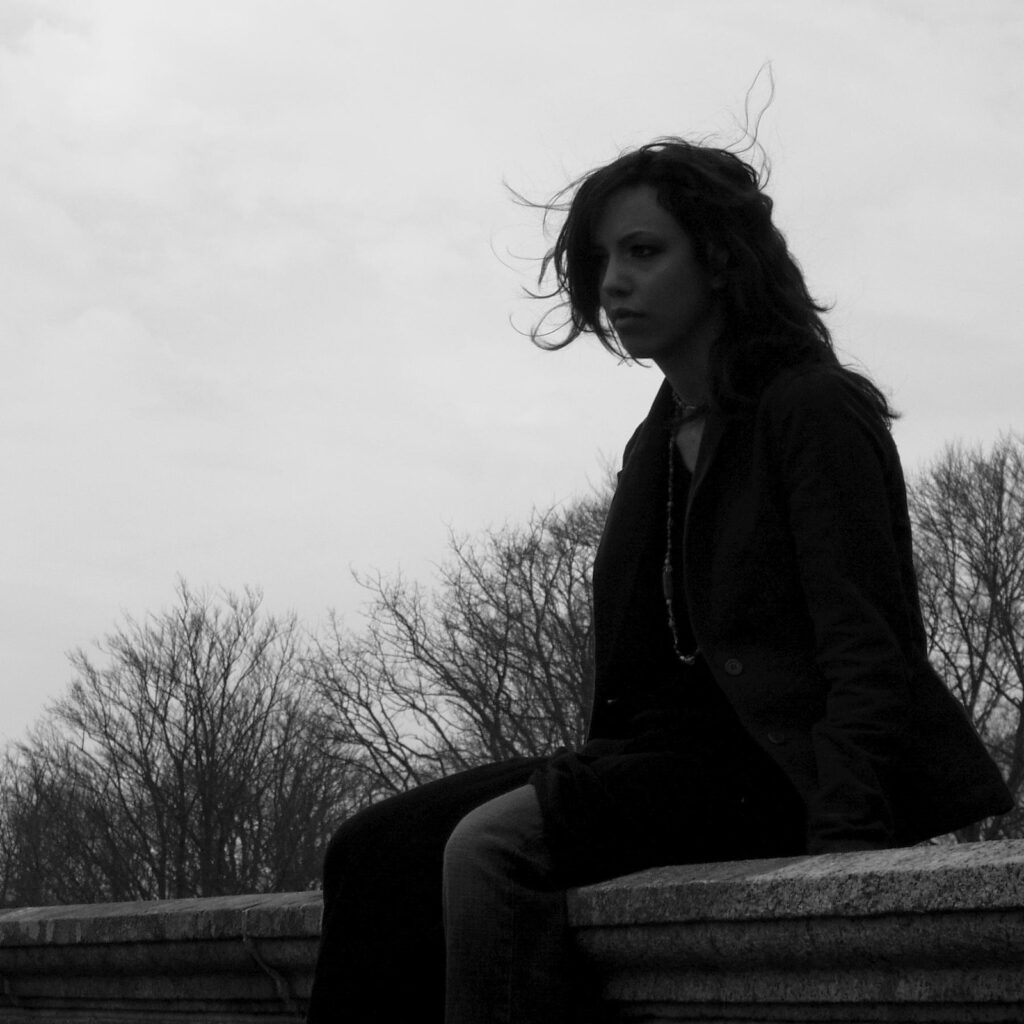
She talks extensively about melancholy, making scholars wonder whether she herself suffered from it. She knew that melancholy hides deep down rage and fury — a knowledge confirmed only today by psychologists.
To her, melancholy is based in the spleen. It is identifiable with an excess of black bile. The basic cure for melancholy is therefore eating substances that support the health of the spleen. Chestnuts, for example, which are good food for everybody, must be eaten roasted — not boiled or raw — by the melancholics. The other types must eat chestnuts prepared in a different way, or eat different plants altogether.
In general, Hildegard’s point is to suggest herbs and plants for consumption that bring back joy to the human spirit — as she writes. Mental health was really her end game, which she pursued through diet and herbal remedies, but also through lithotherapy and psychological attitudes.
Each thing that can be eaten contains subtleties which can contribute to the betterment of the flow of certain humors and the corresponding organs, and which are in the end nothing else than a form of viriditas/vitality being prepared and ingested to restore human viriditas. This is the organic basis of the human being. But Hildegard was also convinced of the curative power of precious stones, each corresponding again to specific psycho-physical needs. Finally, she also knew that it is mostly one’s thoughts that can nourish or poison a person. The natural substances or the stones without the correct attitude can do next to nothing.

In her extensive treatment of melancholy, she never even hints at the possibility that the melancholic soul is guilty for its dejected state. It seems obvious to us not to accuse a depressed person for her condition, but Hildegard’s matter-of-fact attitude was not so common in religious circles at all. Stating that everybody is a sinner did not mean to her that people should feel diminished by this information, but only that people are all sick and must be appropriately cured, since the original balance of the Edenic state has been lost.
She insisted that each person’s basic condition is natural and the basic treatment is material. She also gave suggestions for improving one’s state with one’s mental actions, that is, with one’s attitudes.
In her book Liber vitae meritorum, she strongly suggests that when one is negatively affected by a habit, one should not confront it directly. She knows that such a confrontation usually results in an uneven match between a strong, established behavior and a weak will. One should instead begin by fostering and nourishing the opposite virtue little by little.
For example, if I discover that I tend to keep things and people to myself, it is of no use to lament my avarice as the gravest of sins, or decide to give away all my money. It is helpful, instead, to start with small acts of kindness and open-heartedness, and then observe how I grow into my new self.
Banner Image: As an abbess, Hildegard of Bingen guided the nuns of her abbey. 13th-century illumination. Wikimedia Commons
Queries for Contemplation
What do you find convincing, if anything, in Hildegard’s understanding of physiology and psychology?
Related Readings by Matthew Fox
Hildegard of Bingen, A Saint for Our Times: Unleashing Her Power in the 21st Century, p. 30
Illuminations of Hildegard of Bingen
Hildegard of Bingen’s Book of Divine Works: With Letters & Songs
Gabriele Uhlein, Meditations with Hildegard of Bingen, Preface by Matthew Fox.


5 thoughts on “Hildegard as a Psychologist”
What I find most interesting about Hildegard von Bingen is, first, that her name, Hildegard, means “protection against war.”
Every aspect of her legacy promotes peaceful ways of living in harmony with the Earth community that are key to outer and inner peace.
Another element which I find interesting and that may explain why we so admire her is that she lived in the 12th century (1098–1179), a period officially classified as the High Middle Age, i.e. the tail of roughly 800 years of a Yin phase of Western civilization. In the continuity of our civilizational cycles, the 12th century is also the dawn of the following Yang phase, a phase that saw the Crusades, the rise of Gothic cathedrals, the Age of Exploration, the rise of national and colonial entities, the beginning of a global village consciousness, etc. and the cult of Black Madonnas as relics of the bygone Yin era.
In that context, Hildegard is like a flower that bloomed on the compost of 800 dark years, so was Master Eckhart. At the end of our current phase of Yang expansion (roughly 1100–1900), she feeds our nostalgia for youth and for a model of human potential we did not heed and are desperate to revive.
BUT: “If all time is eternally present
All time is unredeemable.
What might have been is an abstraction
Remaining a perpetual possibility
Only in a world of speculation.
What might have been and what has been
Point to one end, which is always present.” [T. S. Eliot]
I love Hildegard!
I admire her Faith and wisdom to serve others by being in Communion with God’s Spirit of Love and Healing Present within and among her in Sacred Mother Nature…
Fascinating observations on Hildegard of Bingen. Thank you.
Much to ponder about her since she covers seemingly everything.
I could not help thinking about what goes in our bodies as food and how it
may affect our mental health. The modern western (American) diet with excessive sugar salt and fat and how much that may be responsible for
disordered thinking. What would she say?
I love the idea of health as balance, and resonate with that deeply. So many forces seek to disrupt our balance and so we are faced with many health problems. Ultimately I believe deep spirituality is the best restorative medicine to rebalance. We co-create our realities, and our thoughts and choices are very important.
The way we perceive ourselves in the world and how we relate to others, and create harmony or chaos, directly affects our health. Whether we spend our days looking back, forward, or being present in the moment affects our health. Whether we are doing the work we came here to do or not affects our health. Lying to ourselves and others affects our health.
I was diagnosed with stage 4 cancer in 2024, and I am grateful for the allopathic medicine that saved my life. However, now I can see clearly how severely unbalanced I was in the years leading up to my emergency room visit, and all the conditions that led to my illness. I was gifted and graced with an awakening in 2026 that has illuminated a different path, and I have never felt better in my nearly 60 years!
Love is everything.