
I have been asked recently to clarifiy a few things about the planned June 2027 retreat that we titled Hieros Gamos (Sacred Marriage) in the Italian Alps. These inquiries touch themes that go deep in my spiritual processes and may interest other people as well.
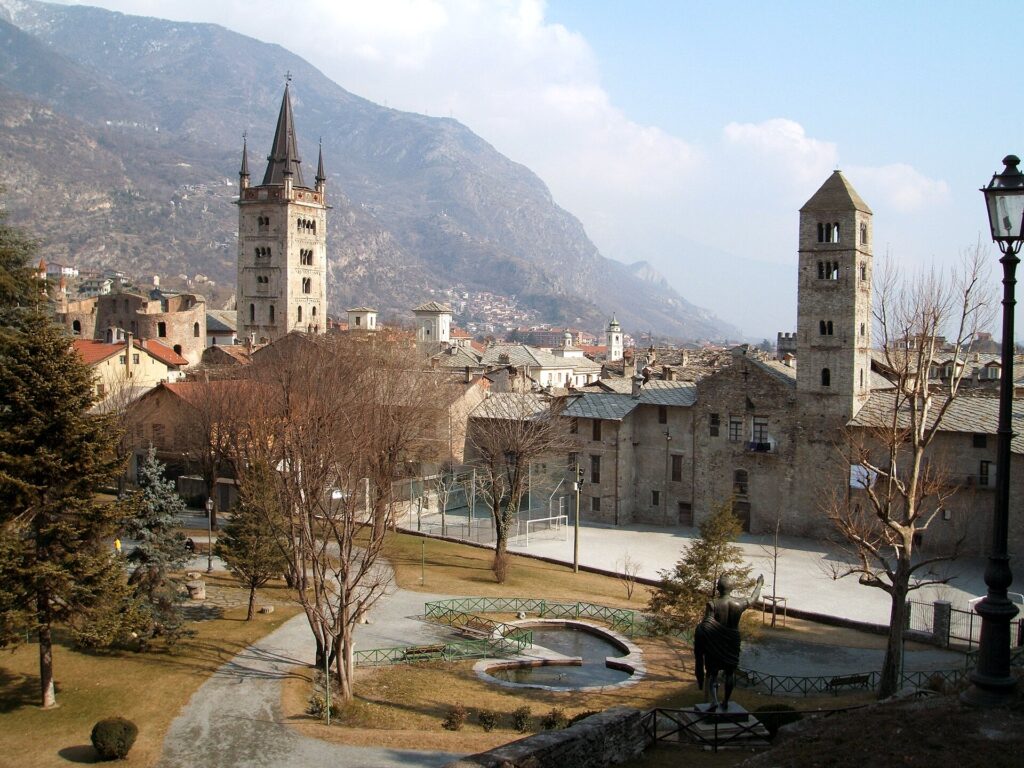
Although based on Matthew Fox’s book The Hidden Spirituality of Men, our pilgrimage/retreat is not by any means directed to men only.
On the contrary — as the book itself maintains — rediscovering the positive male archetypes within every person, after the positive female archetypes have been resurrected, means being able finally to walk toward wholeness, both individually and as a society.
At a time when the ugliest negative male archetypes of war and cruelty have full sway, the inner work of discovery and balance that we are proposing seems to me quite appropriate.
Another query regards the Christian content of the upcoming retreat. The topic came up already during the May 2026 retreat. Now, we present Hieros Gamos as a “pilgrimage” focused on two Catholic shrines: one dedicated to the Black Madonna and the other to the archangel Michael.
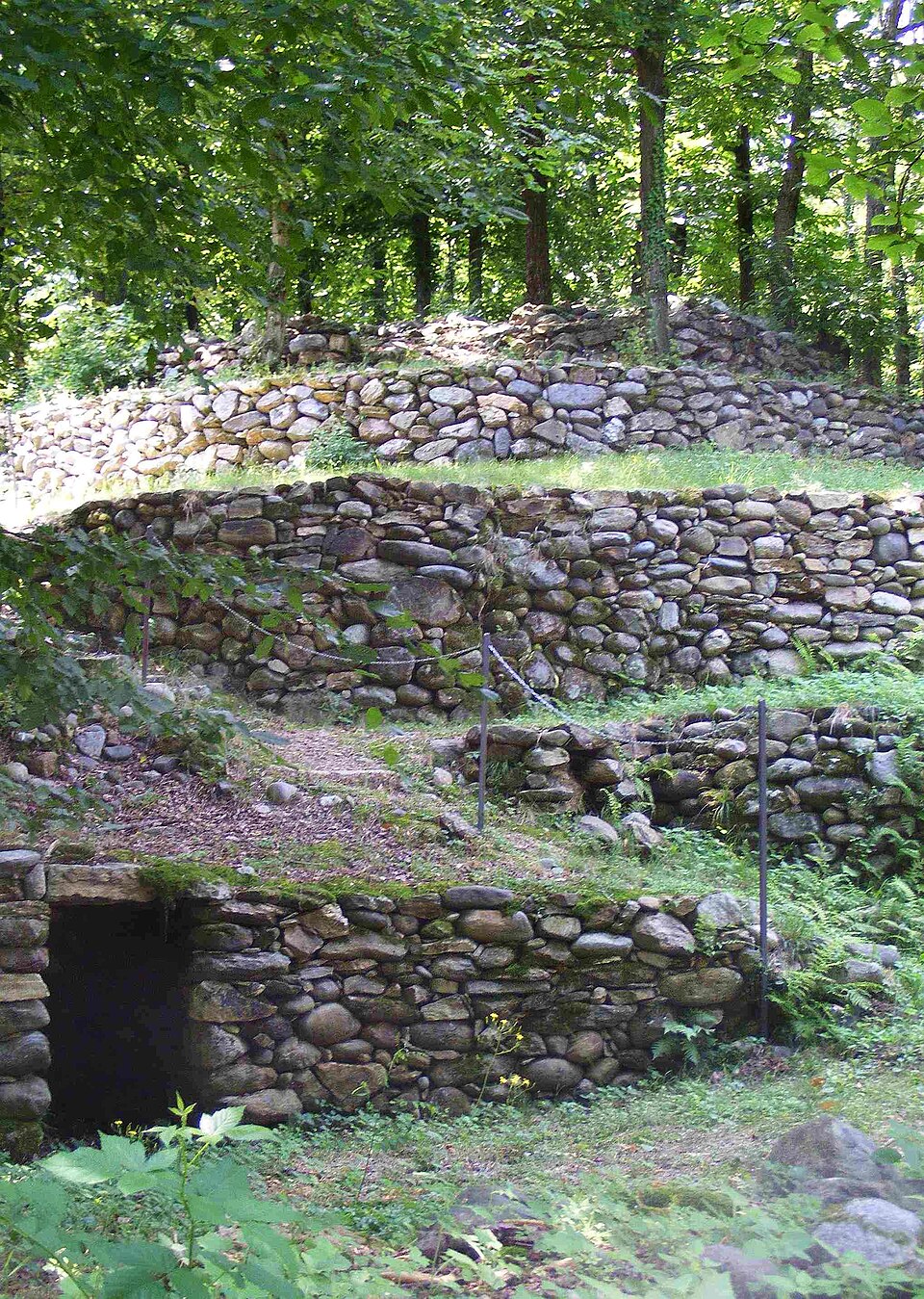
Does this mean that the 2027 edition of our retreats is more Christian than the 2026 edition, which was centered on Neolithic sites? Not really.
I must confess that the genesis of these retreats is quite intuitive and personal. Reflection comes afterwards for me, stimulated as it is now by inquiries from prospective participants, which in this case have helped me to formulate this thought: I find it harder with the passing of time to draw a clear line in my spirituality between its Christian root and what I would call its Earthen root.
Just as Matthew Fox is naturally attracted to the Native American spirituality that has emerged from the land on which he was born and dwells (see November 13’s DM), so I realized that I am drawn to the old traditions of the land where I was born and dwell again at present. If one scratches the surface just a bit, such traditions are still there!
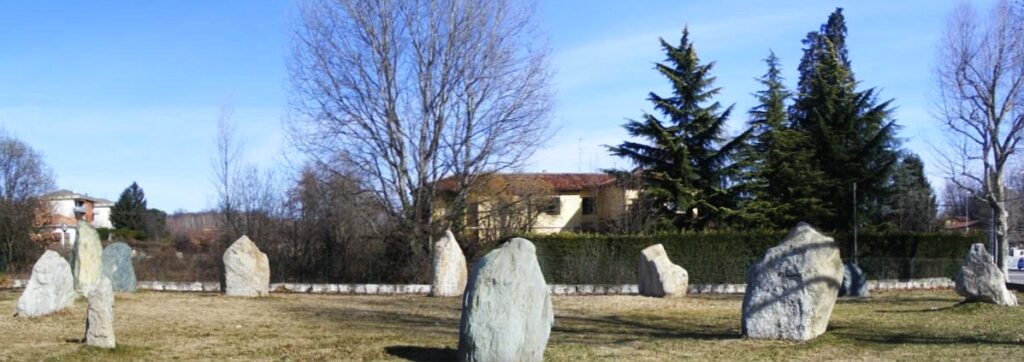
For example, the village of Lu where I live now derives its name from a Celtic deity named Lugh. Besides external clues, many legends and places seem to emanate ancient meaning around here.
The two sanctuaries named above as focal points for the Hieros Gamos pilgrimage/retreat were built on top of rocks that were holy to the people much earlier than the first Christian mission to this land. I leave to you why they are, to this day, the most visited holy places in the region.
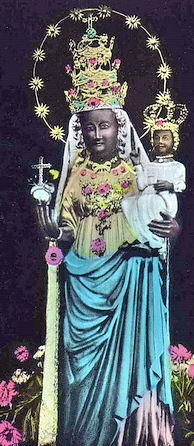
The Hieros Gamos group will also visit, pray, and meditate at a menhir circle unearthed in the city of Cavaglià, at a mysterious Celtic construction in the territory of Mongrando, and at some Bronze Age stone altars in the Susa Valley. My soul both soars and roots when I spend time in those places. I can’t explain why exactly, but I desire to share them with others.
I refuse to leave my Christian identity to adopt a Pagan identity. I leave others their choices, of course. I find it unnecessary for myself to separate from one of the two roots. In the larger scheme of things, my role could be that of reconciling the two beyond dogmatism and beyond the hurts that undoubtedly ensued when Christianity and the religion of the villagers clashed with each other in my region, in the late 4th century CE.
No doubt, shrines were destroyed and altars desecrated. But, then, a large portion of the old beliefs and attitudes toward the Holy were included and continued under new names for centuries. Who do people pray to when they flock to the sanctuary of the Black Madonna? Is there more than one Divine Reality in the universe?
Learn more about the Hieros Gamos pilgrimage and sign up HERE.
Banner Image: Sacra di San Michele cloaked in clouds. Photo by Elio Pallard, Wikimedia.
Queries for Contemplation
Do you have a history of Christian and/or Pagan identity? How do you situate yourself within this polarization? Are you interested in exploring the other side, if there is one for you?
Related Readings by Matthew Fox
The Hidden Spirituality of Men: Ten Metaphors to Awaken the Sacred Masculine
One River, Many Wells: Wisdom Springing from Global Faiths
Naming the Unnameable: 89 Wonderful and Useful Names for God…Including the Unnameable God
Meister Eckhart: A Mystic Warrior for Our Time
A Way to God: Thomas Merton’s Creation Spirituality Journey
Charles Burack, ed., Matthew Fox: Essential Writings on Creation Spirituality
Christian Mystics: 365 Readings & Meditations


10 thoughts on “Ancient Sites: Pagan or Christian?”
As a child, I did not like the way my “Catholic” teachers used the word “pagan” with a touch of contempt or condescension. It felt unfriendly, elitist and unfair. Later on in life, when I realized that those who showed contempt or condescension toward pagans, especially in the Catholic Church, were not better people on average than those they tried so hard (and often so cruelly) to convert, I felt much closer to the latter and I would have felt proud to be called a pagan.
After reading today’s DM, I explored the etymology of “pagan” and learned that it originally meant “rustic,” “peasant.” Digging further into Proto-Indo-European roots, it evokes solidity, firmness. A peasant is indeed firmly rooted in the land.
To answer today’s query for contemplation, I therefore would hope that the polarization between pagan and Christian identities, if, where and when it exists, vanishes into a meaningful Earth spirituality in which being rustic children of the Earth is a privilege that we cherish and honor, whatever our creed or school of thought.
Is there more than one Divine Reality in the universe? Yes, yes, One Reality, many expressions. One river many wells as Matt would say!! The wonder and beauty of Eros in our midst.
I agree with the two previous writers–one deity with countless names. As the Quran has it, when Muhammad asked Allah if all people should be converted to Islam, the deity replied that he preferred to be honored by people of all faiths, just as he was pleased to have created a vast variety of trees. I think many evangelizers may have come to the same idea, like a Catholic missionary priest I know living peacefully in Pakistan in a Muslim community. As Francis of Assisi is said to have ordered his friars, “Preach the Gospel everywhere; if necessary, use words.”
My pagan identity at its deepest spiritual root seems to be a feeling of Loving Diverse Oneness of my Eternal Soul with All Humanity, past, present, and future, and with All physical/nonphysical spiritual dimensions/Beings of Our Loving Evolving Source~Co-Creator in the Sacred Process of the Eternal Present Moment…
I don’t really like labels. I resonate with the original teachings of Jesus, but would never call myself “Christian” as that term is so loaded with baggage after two millennia, especially now. I have a tendency to relate all spiritual matters to what I can observe and experience as a human, in the natural world around me. But I would not call myself “Pagan”.
I have always believed myself to be innately “holy” as a human and that there is nothing various prophets and spiritual leaders have experienced that I can’t experience myself. I’ve always looked within myself and to my relationship with the world around me to find my spirituality.
For example I tend to think of the “resurrection” as likely having an origin related to the winter solstice, where the light “dies” and is “resurrected” three days later.
Of course not everything can be seen, some things are felt, and I’ve learned to trust that too, perhaps even more than what I can see.
I believe every spiritual tradition offers valuable treasures, but I’ve always resisted dogma. Some people find value in dogma and I respect that, but it’s never been for me. There are many paths to the top of the mountain.
Lately I’ve been fascinated by the merger of science and religion. Quantum physics is taking us to some very interesting places!
I have always been drawn to Celtic Spirituality. Its foundation in the land— beneath my feet, my heart, and my soul—grounds me and draws me home. I am drawn to rocks, bluffs, sand, mountains, and soil. As I child I loved digging in and playing in the dirt. I have stayed in a Catholic mission on the Diné reservation and in a hogan in Monument Valley. God is real and present in these places. I can’t stay away from them long.
In 2008, my first stop in Ireland was to visit Kildare (Cill Dara = “Church of the Oak”) where St. Brigid founded her monastery. Visits in Ireland and Scotland feed my soul. So does heading north and spending time in Arizona’s native lands. In both places, I feel the presence of earlier souls who lived there feeding the land and feeding from it. When I discovered John Philip Newell during one of Matthew’s online classes a few years ago, I found a teacher who helps me more fully enter into a spirituality that brings together my tradition as a Christian and my love of land-based, pagan spirituality. Thank you, Gianluigi, for helping me understand your connection to the spiritual traditions of your land. It makes such sense now.
And thank you to all those who responded yesterday to Matthew’s meditations. Your comments are treasures.
Such resonance here…
I left Christian dogma in my childhood, when at age 10 I experienced a vision of the inter-awareness, intercommunication, and sacred oneness of all that is…when it faded, I ran to my mother to share it with her; she told me, “We don’t believe that, dear; it’s pantheism, heresy.” In a choice between rote catechism and that ultimately real vision, dogmatic faith didn’t stand a chance; the vision became the benchmark by which I engaged (or not) in any other denomination or faith. Nearly 40 years later, Matthew introduced me to panentheism….
Now, after having explored multiple faiths, most resonantly the Red Road, and finding an interspiritual home based in Druidry and practicing ancestral Baltic paganism, I hold to Jesus’ saying, “In my Father’s house there are many mansions,” and my own perception of the spiritual as a multidimensional ecosystem – every being having their place, interrelating and overlapping and evolving in their role as humanity evolves in tandem. It was never either-or; it is entirely “yes, and…”
I just wanted to say multiple times that the comments are so helpful. They feed my heart and soul. I am grateful for Matthew and his team and followers. Fro Gratias
I could not agree more. Many Thanks to all for the thoughtful inspirational
comments. I look forward to it. 🙏
There’s so much beauty here, in all the peoples’ spirituality!
I had the Foundational Mystical experience back when I was about 20. Since then, I’ve studied and tracked this Mysticism through Judaism (especially the very first story of Creation and Moses’ Divine encounter). It was also in the first, foundational text of the Gospel of John and hinted at with Jesus’s trip “up on the mountain” in the other Gospels, and is the heart of the first Catholic Creeds. It’s in Meister Eckhart and St. John of the Cross, among many others. It’s at the heart of Kabbalah. It’s in Platonism, Neoplatonism, some of the Gnostics, Sufism, some of the Upanishads, and much of Hinduism. It probably originally went back to ancient Egypt.
In other words, it is FOUNDATIONAL to MONOTHEISM.
It is THE Mystical Experience of the ONE at the very heart of all these religions.
Scholars label it “panentheism.” (NOT pantheism, which would limit God to the universe — a much more common mystical experience of unity).
I also find other religions such as the Native American ones to be deeply important, but they are not my personal ones. They have important insights, but are not my theological Root.