
In 2022, Orbis Books published a book in their Modern Spiritual Masters Series featuring selected pages from Matthew Fox’s writings. This kind of publication represents an achievement, especially for those few who make the list during their lifetime. The list itself ranges from late 19th-century and early 20th-century beloved authors such as: Swami Vivekananda, Evelyn Underhill, Etty Hillesum, Thomas Merton, and Dorothy Day to contemporary heroes such as Daniel Berrigan, Joan Chittister, Thomas Berry, and James Martin.

Occasionally, some readers have asked me to understand better the frame of reference of the pieces that we publish daily. This book might well be what they need. Even those who have known Matthew for a while, however, may profit from reading this anthology which showcases his thoughts at a glance.
The book has been edited by Charles Burack. If you have not read Matthew’s autobiography, you will find a summary of it in Burack’s introduction, which dispels some myths about Matthew’s fight with the Vatican. For example, that he was excommunicated. That never happened. That there was a trial in Rome. That also did not happen. If it did, it would have given Matthew a chance to reply to the accusations. Much more subtle and frankly disgusting techniques were employed to silence him, as Burack reports quite correctly.
After the introduction, the book goes into explaining very succinctly what Creation Spirituality is, including the notions of “original blessing,” the “four paths,” and the “Cosmic Christ.” One would think that such topics already cover the essentials of Matthew Fox’s theology, but the choice made in this book is quite different. In fact, Chapter Two and Three deal respectively with “dreams and visions” and with contemporary science. Pure intuition juxtaposed with hard-core scientific knowledge. What is apparently an irremediable conflict gets reconciled in Matthew’s life and, consequently, in the body of work that he produced as the grounding for today’s Creation Spirituality.
Theologians who came of age with Matthew were quite opposed to both the visionary experience and the scientific understanding of nature. Dreams and visions — an integral part of spirituality for most of humanity at all times and
latitudes, and recorded as such in the Bible — were seen as superstitious remnants of a bygone era. The scientific outlook, on the other hand, even though accepted as a matter of fact, was seen as bearing no consequence
on spirituality and religion. Quite the opposite with Matthew, who probably was a post-modern thinker even before the term was invented.
In Chapter Three, the book discusses the major figures of “creation mystics” as they have been recovered by Matthew: Hildegard of Bingen, Thomas Aquinas, Meister Eckhart, and Julian of Norwich. There are many more who in the so-called Middle Ages were able to practice and teach a spirituality based on nature, very joyous and not obsessed by sin, but these are unmistakably the four pillars which Matthew’s investigation has made alive again. Weaving a kind of fil-rouge within the history of Western mysticism which counteracts effectively the dominant modern teachings obsessed by redemption and suffering has undoubtedly been Matthew’s major contribution.
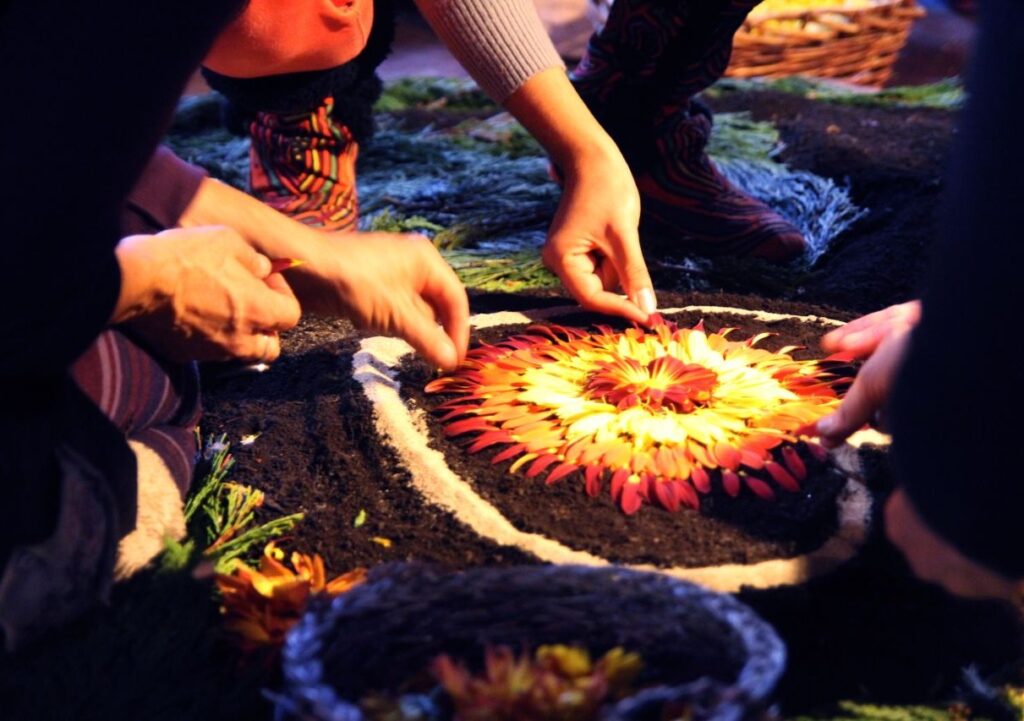
Chapter Four describes the spiritual practices which Matthew suggests regularly as most relevant for today. They always look in two directions. In one sense, they are recovered from the ancestral past. In another sense, they are inspired by the findings of contemporary psychology, especially Jungian and Gestalt. The resulting blend is not only fascinating, but also
very effective. Dance, grieving rituals, and art as meditation — which one finds combined in the Cosmic Mass — are simple but earth-shattering techniques when employed correctly.
Most importantly, Chapter Five opens with Matthew’s revision of the notion of prayer, a revision which is nothing other than reaching the core meaning of prayer as a radical response to life. Once one is able to unpack and practice this kind of prayer — made of attention and presence and action— one has gotten very close not just to the core of Creation Spirituality but to all mysticism. Not just “everybody is a mystic” but also “everybody is a prophet”!

Chapter Six goes deeply into the fight against evil. Some readers have lamented that this topic is too much present in our Daily Meditations at this time. They might find here the reasons why — given the world’s circumstances — we feel compelled in this direction.
After Chapter Six, dedicated to the topic of awakening the prophet and compassion in each of us, the rest of the book goes into detail with regard to youth, education, work, and activism. Compassion, in particular, is an early focus of Matthew’s work. In effect, it represents a kind of vaccine against any New Age drift of which he has been wrongly accused. Not so much as an afterthought but as a consequence of all that the book talks about, the closing topic is the Church and the future of spiritual communities.
Banner image: Matthew Fox and Tristan, his companion and spiritual director of many years. Photo gifted by Rick Reich-Kuykendall.
Queries for Contemplation
What moves you the most about Matthew Fox’s recovery of Creation Spirituality? What topics among those touched on in this Meditation would you like to see treated more?
Related Reading by Matthew Fox
Charles Burack, ed., Matthew Fox: Essential Writings on Creation Spirituality
Confessions: The Making of a Post-Denominational Priest
Original Blessing: A Primer in Creation Spirituality
Christian Mystics: 365 Readings & Meditations
Prayer: A Radical Response to Life
The Coming of the Cosmic Christ: The Healing of Mother Earth and the Birth of a Global Renaissance
The A.W.E. Project: Reinventing Education, Reinventing the Human
A Spirituality Named Compassion: Uniting Mystical Awareness with Social Justice
Sins of the Spirit, Blessings of the Flesh: Transforming Evil in Soul and Society


3 thoughts on “Matthew Fox Essential Writings: Creation Spirituality 101”
What moves me the most about Matthew Fox’s recovery of Creation Spirituality is his courage to publicly speak up about his religious “convictions,” and to walk his talk. Sometimes the price is high for doing so, “conviction” has the double meaning of strong beliefs and condemnation for holding them. Eppur si muove. It is inspiring in a world where wishy-washiness is so common and in a Church where so many clones or relatives of the Little Prince lamplighter officiate.
As far as the topics I would like to be treated more, I can think of none because what I find refreshing about this platform is the variety of topics it addresses and the fact that it does not shy away from political topics like the scandalous state of American politics and the immoral exactions of the Israeli government. Had Al Capone or Jack the Ripper been Jewish, condemning them would, of course, not have qualified as antisemitism.
One more thing: referenced quotes with a bibliographic list below the DM (including self-citations) may sometimes be more “reader-friendly” than the frequent formula “in my book titled this or that I say this or that.”
Thank you Matthew, Gianluigi and “the Team” for this inspiring platform and to the readers who share their comments, thus making more explicit the community it fosters. It would be nice to have access to font tools like Bold, Italics and Underline to give more texture to the comment section.
What moves me most about Creation Spirituality is its wholistic spirituality, including the mystical spiritual traditions of Humanity past, present, and future, especially the emphasis on Our Source~Co-Creator’s Spirit of DIVINE LOVE~Wisdom~Truth~Peace~Justice~Healing~Transformation~Strength~Freedom~Creativity~
Beauty~Joy~Compassion~LOVING DIVERSE ONENESS… ETERNALLY PRESENT within and among Us, in Our Sacred Mother Earth/Her living creatures/Graceful abundance and Our Sacred Living multidimensional/multiverse evolving Cosmos and spiritual interdependent Beings….
We need to truly be grateful, conscious and in Awe to this Loving Creative Spirit Present within Our Eternal Souls and Sacred Cosmos….
I can think of no one who has influenced me more than Matthew, both in his books, (of which I have many and they are all thoroughly marked with yellow highlighter, and I even have a signed copy of one I got from a used books shop!) and the daily messages. All I can say is thank-you, and I mean this more than I can express. And thank-you Gianluigi fir your contributions as well. I agree with Daniel’s and Damien’s comments.