
Complexity is hardly a word associated with spirituality. Its opposite, “simplicity,” often is. Having a simple heart, simplifying one’s lifestyle, and so on and so forth.
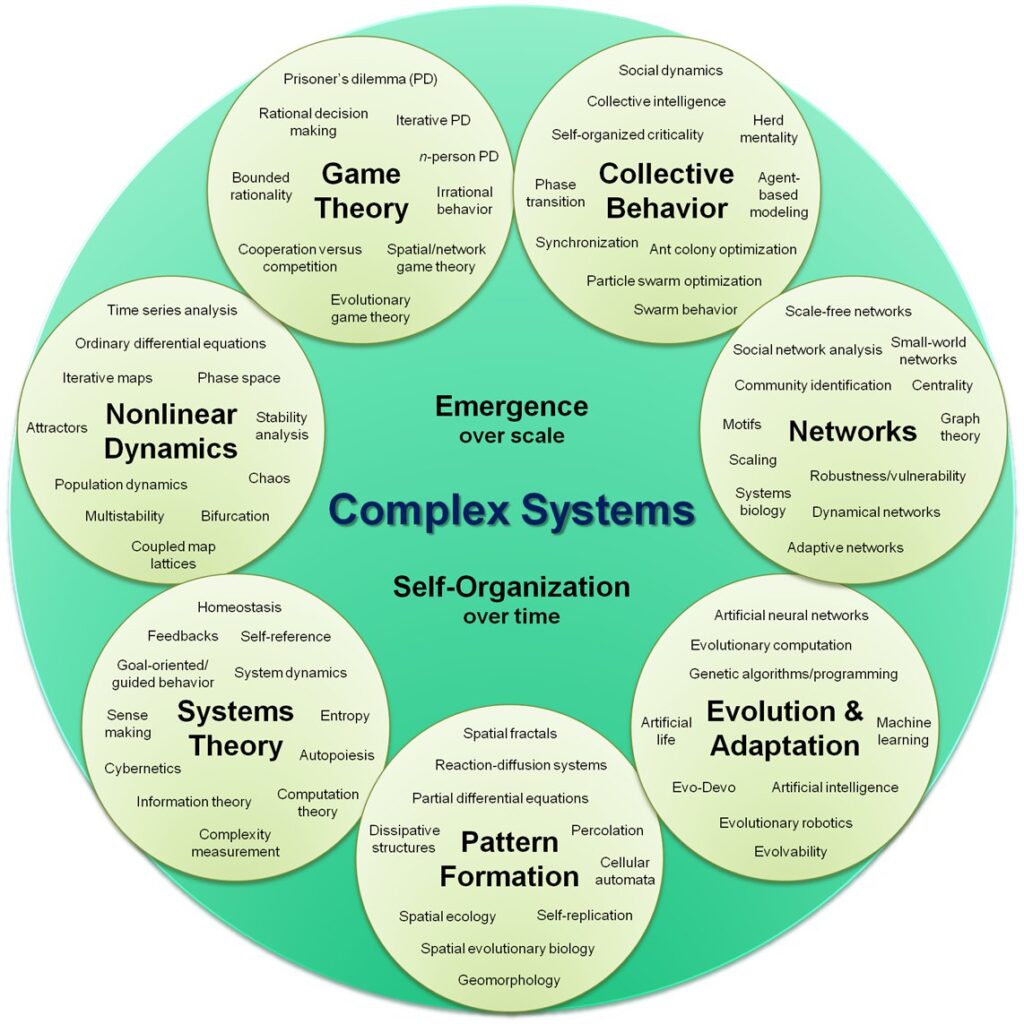
“Complexity” smacks of problems, and we have enough of those already. In the spiritual world, we look for release, acceptance, peace. Surely not for problems.
However, one of the reasons why I affiliated myself with Creation Spirituality is Matthew Fox’s staunch refusal to be assimilated to a New Age personality because, by and large, the New Age movement is uninterested in social problems and social change. On the contrary, the four paths of Creation Spirituality culminate in compassion, that is, in active engagement in favor of the Earth, its creatures, and all of humanity, beginning with one’s neighbors.
Therefore, in the Via Transformativa — which is an integral part of spirituality from our point of view — problems abound, and problem-solving strategies are necessary. This is the main reason why I dare to pair the Foxian Via Transformativa with the Jungian Thinking Function, provided that by thinking one understands not playing with abstractions, but fostering real change in the world. Jung, in fact, offers “the good politician” as an example of a person focused mainly on thinking, that is, somebody who is actively strategizing for the benefit of the whole society.
Now, where there are problems, there is complexity. This is how complexity gets back into spirituality, or at least it’s one way.
To be clear, I believe that complexity is not always a spiritual value. If one thinks too much about one’s existential situation instead of — for example — going out to commune with nature and animals (Via Positiva) or entering into a meditative state in which thinking is disallowed (Via Negativa), one makes things unnecessarily complicated.
An earlier work by Matthew — now titled Prayer: A Radical Response to Life — makes clear that, while problems can be solved, our existence and the most important elements of it, such as love and friendship and pain and evil, are not problems but rather mysteries. This, to me, is a confirmation that complexity is not at the core, or at the beginning, of the spiritual path.
Yet complexity becomes a spiritual value when we engage creatively with anything, such as building up artistic structures (Via Creativa), and is central to the engagement of social issues (Via Transformativa). How many times have we witnessed — or even experienced personally — that addressing a social problem without having studied it may do more harm than good?
The Via Transformativa today reclaims the center stage in our psyches, because of the sorry state of the world. We feel compelled to attend to the news because we know that the life of every murdered child in Palestine is deeply intertwined with ours. And the same is true of forests that burn and valleys that are flooded. Even more, the decisions taken at the level of the American government directly provoke many such miseries.
We must look at the news and empathize and do something. Yet we must also look away from the news and take care of our psychic balance. We must understand that the news cycle is produced partly to raise our level of anxiety, which in turn makes us impotent, and may even make us vote for the worst candidate. It’s a difficult dance that we must dance, that between engagement and self-care. In Creation Spirituality parlance, between Via Transformativa and Via Positiva.

One of the strategies of the powers that be, against which we should fight, is that of simplifying complex issues. Then making us enraged to such a level that we become anxious. At this point, our rage fizzles away and does not turn into action. Couchpotatitis in front of the TV is no longer a joke, but a paralyzing condition of our age.
Could a better balance between simplicity and complexity help us? Could we even think of overcoming the dualism between the two? I often go back to Matthew’s suggestion about such overcoming of dualisms in his work A Spirituality Named Compassion. It’s one of the most useful tools for my life I was ever gifted.
(to be continued)
Banner Image: Natural complexity: one ecosystem, three zones — the aquatic stream system, the terrestrial soil system, and the moss layer bridging the two on rock and deadwood, all exchanging nutrients. Photo by Dylan Luder on Unsplash
Queries for Contemplation
What do you think of complexity as a spiritual value?
Related Readings by Matthew Fox
Prayer: A Radical Response to Life
A Spirituality Named Compassion: Uniting Mystical Awareness with Social Justice
Wrestling with the Prophets: Essays on Creation Spirituality and Everyday Life
Original Blessing: A Primer in Creation Spirituality
Creation Spirituality: Liberating Gifts for the Peoples of the Earth
Matthew Fox and Adam Bucko, Occupy Spirituality: A Radical Vision for a New Generation
Matthew Fox, Skylar Wilson, Jenifer Listug, Order of the Sacred Earth: An Intergenerational Vision of Love and Action
One River, Many Wells: Wisdom Springing from Global Faiths


8 thoughts on “Complexity – part 1”
I would see complexity as a spiritual value when one can’t fully understand a situation, such as whether the chicken or egg came first, but one has the motivation and desire to resolve it in the most wholesome and beneficial way.
To me, complexity becomes a spiritual value when it triggers awe and humility. When I get carried away trying to find solutions to complex and probably unsolvable problems, I remind myself of my favorite biblical reference: Job 38 to 42. “Where were you when I laid the earth’s foundation? Tell me, if you understand. […] Do you know when the mountain goats give birth? Do you watch when the doe bears her fawn? […] Do you give the horse its strength or clothe its neck with a flowing mane? […] Does the hawk take flight by your wisdom and spread its wings toward the south? Does the eagle soar at your command and build its nest on high? […] Can you pull in Leviathan with a fishhook or tie down its tongue with a rope?”
It usually ends in a burst of laughter meaning, “Who the hell do I think I am?” Then, I enjoy breathing.
Yes, complexity must be included in our living, I am sitting now looking at a maple tree in my back yard and seeing its complexity. Thousands of leaves each with a complexity of their own. Hundreds of roots digging into the ground for support and nutrition. the bark, which covers and protects its core. Its core which I cannot see carrying nourishment to the leaves. Its many limbs moving gently in the wind. Very complex. A mystery. I sit in awe and wonder. What a unique organism it is.
Complexity as a spiritual value is a humble reminder to me of the Faith and openness needed in our spiritual journeys of transformatively integrating the Mystery of our human and Divine natures of Loving Diverse Oneness with-in Living and Evolving Sacred Mother Earth/Cosmos, including All physical/non-physical spiritual dimensions/Beings, of Our Loving Source~Co-Creator in the Sacred Process of the Eternal Present Moment…
Thank-you for taking on a difficult subject, you made good sense. I have a lot of Matthew Fox books, but not the two you refer to. Guess I will have to rectify that, lol.
I find myself avoiding complexity. It does nothing for me spiritually – in fact it erodes my spirit and makes me grumpy. Tax laws, health insurance, managing passwords…so many things are needlessly complex. I believe this happens to disorient us and helps the creator of the complexity to maintain and gain power. For example it is literally impossible to comprehend the US tax code. Even professionals will differ on their interpretation of the chaos. This makes us laypeople hopelessly at the mercy of whatever they claim the laws to be. They create chaos, then gain power because of it. These kinds of systems are anything but spiritual. The news/pundit industry works the same way. As do governments in general. And churches for that matter.
But also there exist many complex systems that work simply (most found in nature), and these systems do resonate spiritually for me.
Spirituality seems to me to be about lowering entropy in general. Becoming less chaotic, less complex, less scattered. Choices are easier to make and more impactful when made in simple clarity rather than chaotic complexity. And we are nothing if not a product of our choices.
This is all well and good, but quite complex to read.
I subscribe to the following fundementals:
1. Acceptance of the moment as my onlt reality
2. Everything Belongs and is good since its all made by God.
These 2 things cover just about everything in my experience and maybe everything. I keep my options open because humility demands that I refrain from thinking I have all the answers.
It’s like in classical physics, many long hairy formulas can be boiled down to Newton’s 2nd law, F=ma. Its the guiding principle. This kind of thinking keeps life simple when the complexity of a problem seems overwhelming.
Thank you Gianluigi for identifying the need for the Via Transformativa at a time when
new age thinking can sometimes lean toward inertia given the rationale I have heard so
many times, “it is that person’s karma (ie to suffer, struggle, or end up as a victim of injustice).
I believe Thich Nhat Hahn emphasized a justice orientation in his practice of Buddhism
and Thomas Merton also focused much of his writing on the prophetic consciousness.