
Studying the canonical texts of Christianity — the so-called New Testament — in a way that focuses on their historical and literary aspects may seem at first sight a dry pursuit, devoid of spirituality. In reality, it can be the opposite. The history that lies beyond the text is necessary to understand what the text means in context. Reading the text as a literary work, moreover, yields meaning that can be obscured by its dogmatic use through centuries of theological interpretation.
The Gospel of Mark is my main example. Most readers, informed by their experience of the church, see in this Gospel the story of a powerful man who is really the Son of God. The point of the miracle stories is confirming the divinity of Jesus; the faith in Jesus of the healed people is something to imitate. That’s about it. And it’s a very poor reading.
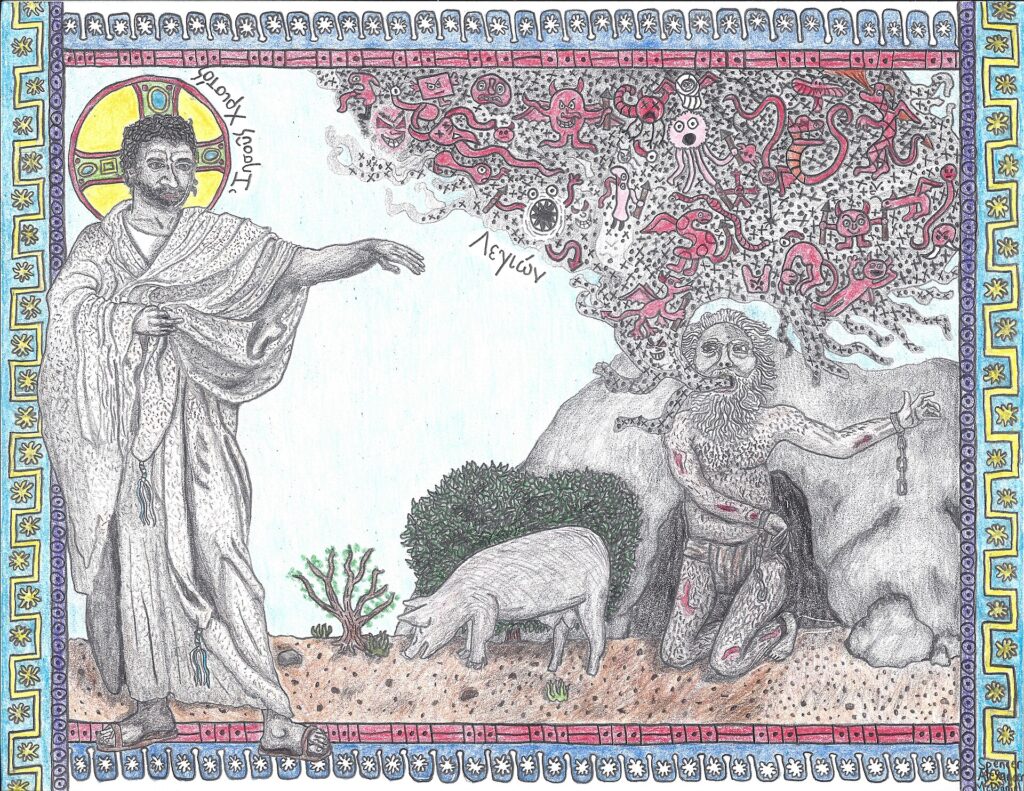
A literary/historical reading will bring forward some other themes: the fight against inner and outer demons; an alternative vision of society than the empire; the creative breaking away from one’s family context; healing as wholeness and social inclusion; the toppling of bad religion and a scathing critique of religious leaders including one’s own; memory as community-making and healing of trauma (for the storyline of the Gospel of Mark, see yesterday’s DM).
Perhaps the most interesting discovery in my digging into the Gospel of Mark has been the realization that the story of Jesus is also the story of each person who moves through life with prophet-like courage, royal-like dignity, mystic-like energy, and thus allows herself to become a full human being. I love to teach this Gospel in small groups, allowing each participant to work on their own life story, while they learn all the necessary historical elements that make for an interesting reading.
I am not the only one who has offered a Jungian reading of the Gospel of Mark, even though it is certainly not a common approach. In 1985, Diarmuid McGann published a small book whose title, The Journeying Self, says it all. Very appropriately, McGann explains how Mark leads the readers to identify with the several characters in his Gospel — thus with parts of themselves — and how the storyline as a whole is a blueprint for the itinerary of individuation, that “becoming oneself” to which Jung believed we are all called.
Eugen Drewermann, in turn, published in 1987-1988 an interpretative work on the Gospel of Mark with the subtitle Bilder vor Erlösung, that is, “images of redemption” — the book has not been translated into English. Drewermann looks at each of the pericopes in Mark as instances of liberation from existential anguish, in order to pursue a free and wholesome life.
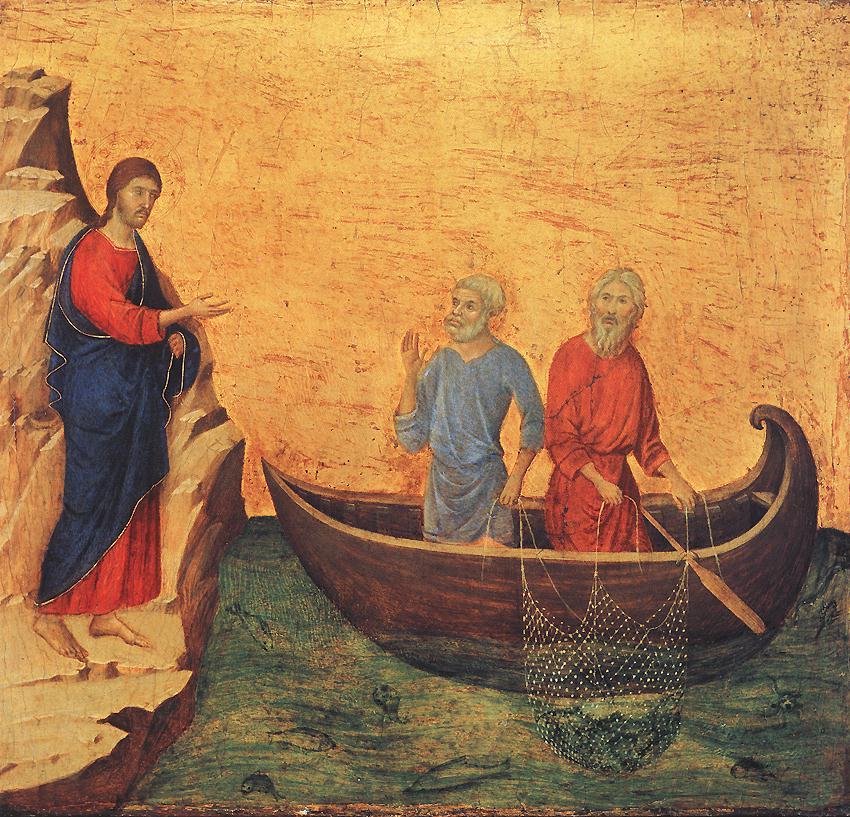
In Drewermann’s interpretation, the Markan demons become our psychic disassociations; the faith of the characters is their almost desperate yet insistent belief that their broken mind can be healed; the death of the Son of God is willed by the unhealed people, not by God. Drewermann strongly believes that the inner and outer imposition of moral codes cannot heal — or even calm — our anguish, but trust through relationships can (For more on Drewermann, see DM September 11, 2026).
As I am preparing myself to teach again an online class on the Gospel of Mark — in English this time — I realize the wealth of Markan interpretations that I have introjected through the years, including a Buddhist reading and a womanist reading. Yet this text keeps yielding meaning. Two people have decided to come back this year, enrolling in the Italian version of the class, and start reading it again with me from the beginning, as they find this Gospel almost inexhaustible.
To those who wonder how it is possible that the author of Mark understood Jungian theory, I submit that Jung did not say anything new. He simply delved into the depth of the collective unconscious where others before him have delved, even though they did not give it a name.
Banner Image: A 14th-century Armenian illuminated manuscript painting by Sargis Pitsak. The first page of the Gospel of Mark, Cod. 2627. Wikimedia Commons. Public Domain.
Queries for Contemplation
Have you encountered any Jungian reading of the Gospel or other biblical texts? Did you find such interpretations helpful?
Related Readings by Matthew Fox
Charles Burack, ed., Matthew Fox: Essential Writings on Creation Spirituality
Original Blessing: A Primer in Creation Spirituality
The Beloved Will Guide You: St. John of the Cross and the Triple Dark Night of Our Times
Matthew Fox and Bishop Marc Andrus, Stations of the Cosmic Christ
A Spirituality Named Compassion: Uniting Mystical Awareness with Social Justice
Prayer: A Radical Response to Life


4 thoughts on “The Gospel of Mark, part 2”
Thank you Gianluigi for this insightful “Jungian-style” interpretation of Mark’s gospel!
“The story of Jesus is also the story of each person who moves through life with
prophet-like courage, royal-like dignity, mystic-like energy, and thus allows herself
to become a full human being.”
Thank you Gianluigi for this liberation of Mark’s Gospel from centuries of droning through it literally and coating it with thick dogmatic icing. To be fair, can we blame the legions of theologians who have, for centuries, concentrated on the finger and missed the moon? They did not have the benefits of the travel logs of the many explorers of the inner human landscape we have access to, nowadays: the likes of Carl Jung, Eugen Drewermann, Diarmuid McGann, Erich Fromm, Graf Dürckheim, Alan Watts, John Dourley, Helen Luke and so many others whose findings about the human mind and soul help us read between the lines of ancient Scriptures (intelligence comes from inter legere, to read between), even if some of them did not specifically write about the Gospels. When Mark’s Jesus says “God’s kingdom is very near,” Luke’s Jesus adds, “the kingdom in your midst” and Augustine confesses, “God is nearer to me than I am to myself.”
Despite such precious indications, we often repeat the story of the man who was searching his lost house keys in the halo of a streetlamp. After searching through every square inch without finding the keys, the generous passer-by who had come to help asked: “Are you sure that you lost them here?” “No, said the man, I lost them over there, but over there it is dark…”
My tanka on yesterday’s DM
Mark, Matthew, Luke, and John,
I now realize that you all
suffered grief, loss, and trauma
when they murdered your Rabbi.
Tears flowed like ink as you wrote.
©️ J. Patrick Mahon, 2026
When does your English class on Mark start and Joe to sign up?
Yes! The spiritual dimensions of Jungian depth psychology, especially the individuation process and the True Self archetype, were intuitively very influential in my career as a psychotherapist and continues, along with other spiritual traditions of the subtle spiritual realms, to be very helpful on my ongoing spiritual journey and transformation…