
Let’s suppose that we identify complexity as a spiritual value, under certain conditions. And that complexity is especially important within the realm of the Via Transformativa (see yesterday’s DM). What does this imply?
A famous anecdote in Italian history regards an anti-communist politician who, at the height of the Cold War, reportedly said: “If it is raining, and the Communists say that it is raining, I will gladly be able to tell you that the Communists are right.” That seems to be the minimum requirement for human communication and respect, even between people who frankly disagree with each other.
But today there is hate, not disagreement, at the center of the stage. I am willing to go so far as to allow for hate to play its part. I am reminded of the Greek philosopher Empedocles (5th century BCE) whose penetrating cosmic vision allowed him to understand that Hate (Neikos) is just as important as Love (Philia). Hate produces Chaos, which is necessary to destroy the previous structures before giving way to Love and its production of Order, effectively ushering a new eon.
One of the effects of the present chaotic state, however, is our extreme reactivity. If Trump says anything, my first reaction is to say “No, it’s false.” Of course I have good reasons to react in such a way, as he has more often spoken lies than truths. But what if he is saying, “It’s raining today,” and it is, in fact, raining? It would be more accurate to assume from previous experience that when he tells a truth, he is already trying to manipulate it for his nefarious purposes. Not that every single sentence he utters is false.
A case in point, which is very important for those of us living in Europe, is the Russia-Ukraine conflict. Three years ago, the invasion of Ukraine by Russian armed forces found all European and USA liberals enraged on the grounds that the attackers and the victims of the attack should be treated very differently. The principle of territorial integrity was rightly named as one of the most sacred principles of modern politics, without which hell —that is, Chaos — may break loose.
Surprisingly, however, the principle of people’s self-determination— equally important in modern political philosophy — was not brought up. It was all but forgotten that in 2014 the Russian-speaking regions of Ukraine held a referendum which made it very clear that an overwhelming majority of people living in those areas wanted to secede from Ukraine.
In the years that followed, the Ukrainian army bombed their own people. This is information that is often dubbed as Russian propaganda. However, I watched with my own eyes several video reports that were broadcast in 2016 by the Italian public television and are unequivocal.
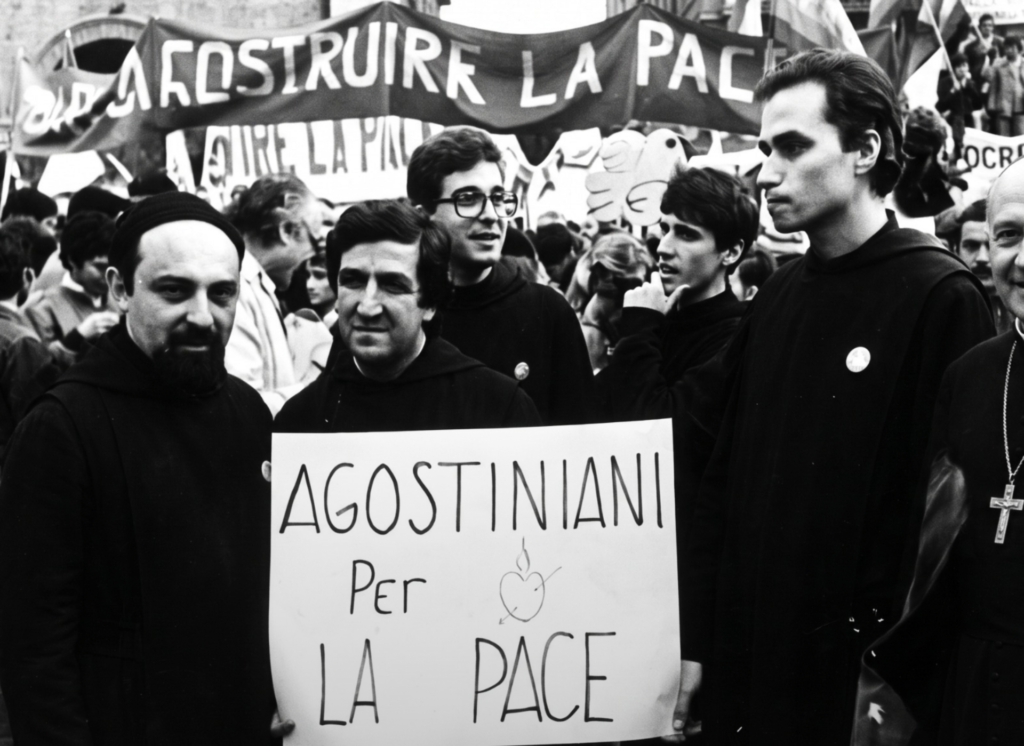
I was also able to speak with people directly involved in the conflict who found refuge in Italy. The brutality on both sides, before and after the invasion, is rarely reported in Western media and is appalling. There is nothing humane or fair about this conflict. I have direct information of Ukrainian soldiers tasked with ambushing and torturing their counterparts to death.
At this point, three years after the invasion, there is no interest by the EU authorities in finding common ground with Russia. Only the Vatican continues to pursue a diplomatic solution. The Ukrainian crisis has become the reason why Europe “must” pursue a strong military upgrade, reaching 5% of GDP for weapons and army expenses, buying missiles and jets mostly from the USA. We are told that we must defend ourselves from Russia’s imperial ambitions.
The Ukrainian war has become very productive for the merchants of death. Its continuation is predicated on the assumption that it is impossible to find any agreement with Putin, and Russia is ready to invade Western Europe.
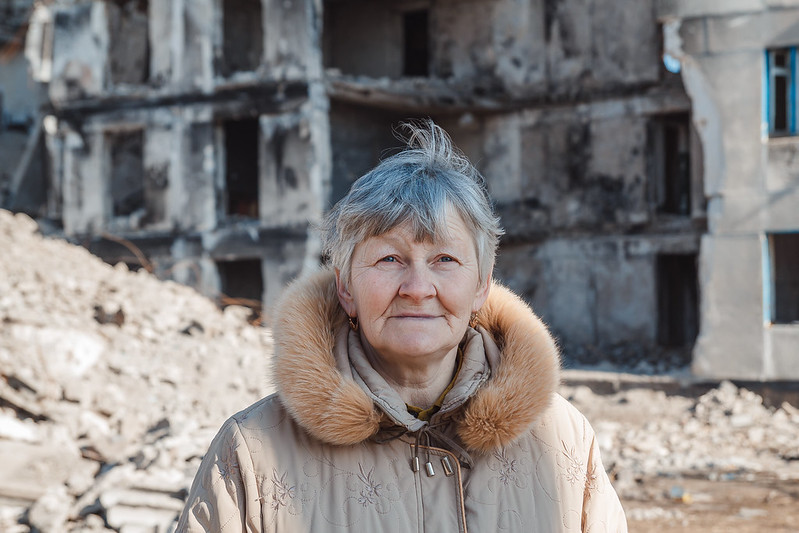
These ideas don’t stand up to reasoned debate, and mix moral and religious categories with political categories. Putin is a bad person, but he is not stupid; the invasion is illegal, but it’s not Armageddon. In no sense could Russia profit from invading Western Europe or rule it directly or indirectly. It is simply absurd.
When Russia invaded Ukraine, I engaged in a FB fight with a bishop of the Episcopal Church, who posted with approval a picture of “Ukrainian mothers” ready to pour boiling oil over the heads of the Russian soldiers marching in their streets. I objected that the Russian soldiers are for the most part young men who have no options than going to war or being killed, and they also have mothers. I was scolded as only bishops can do to priests — it’s a special thing, I assure you — but he ultimately took off his post. This is an example of extreme simplification that plays the game of Hate, rather than observing its damage and accepting, to some extent, its present rule.
I think that we who are spiritually aware have a great task in the present moment. Keep complexity alive. Understanding that any war has complex roots and people who want to profit from it on both sides. Supporting diplomatic solutions always, knowing that both sides will lose something in the process, to gain peace.
We prefer simple explanations to complex political and historical problems because we are overwhelmed, and feeling right sometimes gives us a sense of control that is so badly missing in the present chaos. Even so, I think that we are called to let go of our need to control the situation, accept the chaotic complexity of our time, and root for the basic values of our common humanity and for nothing else.
Banner Image: No Man’s Land after the Battle of Bakhmut, Ukraine, 2022. Photo by Viktor Borinets, Ministry of Defense of Ukraine on Wikimedia Commons
Queries for Contemplation
Do you have examples other than the Russia-Ukraine conflict in which complexity shines as a spiritual value?
Related Readings by Matthew Fox
The Beloved Will Guide You: St. John of the Cross and the Triple Dark Night of Our Times – available for preorder
TRUMP AND THE MAGA MOVEMENT AS ANTICHRIST: Recognizing the Archetype of Evil in Our Time – available for preorder
The Tao of Thomas Aquinas: Fierce Wisdom for Hard Times
Order of the Sacred Earth: An Intergenerational Vision of Love and Action
A Spirituality Named Compassion: Uniting Mystical Awareness with Social Justice
Sins of the Spirit, Blessings of the Flesh: Transforming Evil in Soul and Society
Occupy Spirituality: A Radical Vision for a New Generation
Prayer: A Radical Response to Life
One River, Many Wells: Wisdom Springing from Global Faiths


9 thoughts on “Complexity – part 2”
I am deeply troubled by some statements related to the Russia-Ukraine conflict in today’s DM.
The first one is that we are closer to five years (54 months) than to three years after the invasion. Not a detail when measured in human lives and suffering.
Another point is that if we sincerely adhere to the fact that “the principle of territorial integrity [is] rightly named as one of the most sacred principles of modern politics, without which hell —that is, Chaos — may break loose,” the buck should stop here. That principle was established in the Covenant of the League of Nations in 1919 at the hefty price of 18 million deaths, hideously violated in 1939, and reaffirmed in 1945 in the U.N. Charter, at the exorbitant price of 80 million deaths. Admittedly, national frontiers are markers of human immaturity, but maturescence is a slow process and we have to live with it. It should be up to the populations living within the boundaries of Ukraine to decide whether or not they are prepared to unleash an ugly civil war within the country’s boundaries or to engage in a political struggle to get what they want without riding on a military aggression by another country. Are we prepared to set back our moral clock by one century and to risk another 100 million deaths or more (there is inflation there too!) to avoid naming a cat a cat?
Without denying the complexity of human affairs, adding ambiguity to complexity does not help.
I can’t see any good in the power of hate since it only supports duality and our separation from what is good. Why not replace the power of that word with another – discernment, the gift that comes to our aid when we are called to stand in our truth even when that truth means that we stand alone.
The enclosed video prayer in today’s DM, “Please Call Me By My True Names,” by Thich Nhat Hanh, is very spiritually profound and beautiful about the mystery and evolution of Divine Love/Compassion in Our Eternal Life Journeys of Loving Diverse Oneness…
The more I think about it, the more it seems like complexity is ever present, everywhere, all the time. Same with simplicity. Maybe it’s just a matter of choosing which state we want to be in? I know that when I immerse myself in the news and world affairs, it unravels me and makes me feel very chaotic and disordered. But when I choose quiet meditation, or a walk in the rain, suddenly I am peaceful and calm, and life is simple and orderly again.
Perhaps it’s our choices that matter most? Maybe we can choose to see any situation as complex or simple? Regarding the Ukraine conflict – this exact dynamic has been happening for thousands of years all around the world. It seems to be a natural state of the human condition. Maybe we can choose to see the simplicity in that. As horrible as it is, and has always been, it will end one day, and then some other place will be at war… and on and on. Maybe this is somehow a part of our evolution? At some point maybe more of us will choose simplicity and the chaos will subside?
I don’t know anything, just musing.
Agree with Daniel’s comment. Putin’s a monster to both Ukraine, &his own people in Russia. Zelensky is a truly decent man in an untenable spot. I understand that problems &conflicts have complex roots. But listening to people who have been on the ground in Ukraine during the Russian invasion, as well as world recognized experts on fascism &the history of Europe/Russia like Dr.Timothy Snyder, there’s no question that Putin does have dreams about Europe, &the ongoing atrocities committed by Putin are war crimes (murder,rape,torture, kidnapping Ukrainian children). This doesn’tmean that Ukraine’s prior treatment of Russian areas in Ukraine is untrue, ðically wrong, but I suspect that was prior to Zelensky? Putin’s war is illegal. There’s many Russian soldiers who don’t want to be there, as evidenced by many who’ve volunteered to surrender rather than keep fighting (note Ukraine has not killed Russians who surrender). Ukraine must be supported, or Putin will take what he can get. Zelensky is willing to get a negotiated peace&we all pray for that, but Putin has demonstrated many times he doesn’t negotiate in good faith, or even show up to talks. He interferes in other country’s politics with disinformation, he’s currently trying destabilize my country, Canada. Joe Biden was right when he looked Putin in the eye &said his eyes showed a dead soul. Things are complex, but we shouldn’t be naive, we should physically support Ukraine, and pray for peace.
Very much agree with Daniel and Vivian. The complexity issue is obscured in this example… yes Ukrainian corruption before Zelensky existed but support for a tyrant and murderer in Putin is not making the issue clear at all.
What I’m hearing in this meditation isn’t a position on Russia or Ukraine. It feels more like a teaching about complexity itself and our willingness to stay with something without quickly reducing it to an either/or.
Can we hold something that is painful and complicated without needing to make it simple? Can we listen long enough to see more than one truth at a time?
It also reminded me of the teaching attributed to Mother Teresa about being for peace rather than against war. The idea is that we put our energy toward what we are for, rather than putting our energy into what we are against. That feels important here. Where we place our attention matters.
For me, the value of complexity isn’t that we stop discerning or stop caring about what is right. It’s that we don’t let our certainty close us off from compassion, curiosity or a bigger view.
I appreciate this meditation for opening that door.
At the end of this day, I have just watched a short BBC video of President Putin welcoming Steve Witkoff and Jared Kushner to Moscow in an attempt to negotiate a Peace Treaty. Once seated, President Putin begins by saying that the situation is “not so easy”; in other words it is complicated. By the same token, when seen through a spiritual lens, it is incredibly simple. It begins with these words and a smile, “Gentlemen, let us have peace with our neighbors and good friends in Ukraine. Let us live together in mutual cooperation and support for our peoples and our families. Please tell me how I can support this process in every way and I and the people of Russia will be most happy to play our full part.” Humans complicate the simple things with our failure to remember who we are and our calling to live and abide by the tenets given to us by Jesus, Buddha, Lord Krishna and others.
I agree with the complexity of the situation. I just watch American Doctors a documentary on the war crimes committed by the IDF. I left the movie feeling the same way that the IDF felt after what Hamas did in October 2023. Joining with evil will not bring peace. Taking up the long and difficult process seeking justice through a fair judicial system is not the fastest way but it is the only one that can heal. The South African Truth and Reconciliation process is an example of seeking justice for the victims without creating new victims.