
In recent weeks, students have been the protagonists of revolts in Serbia and Italy. The Serbian “student list” has won parliamentary elections with a large majority, ending the 14-year rule of Aleksandar Vučić. In Italy, demonstrations led by students have been met with an exceptionally high level of repression and have ignited yet again a conflict between the government and the judiciary.
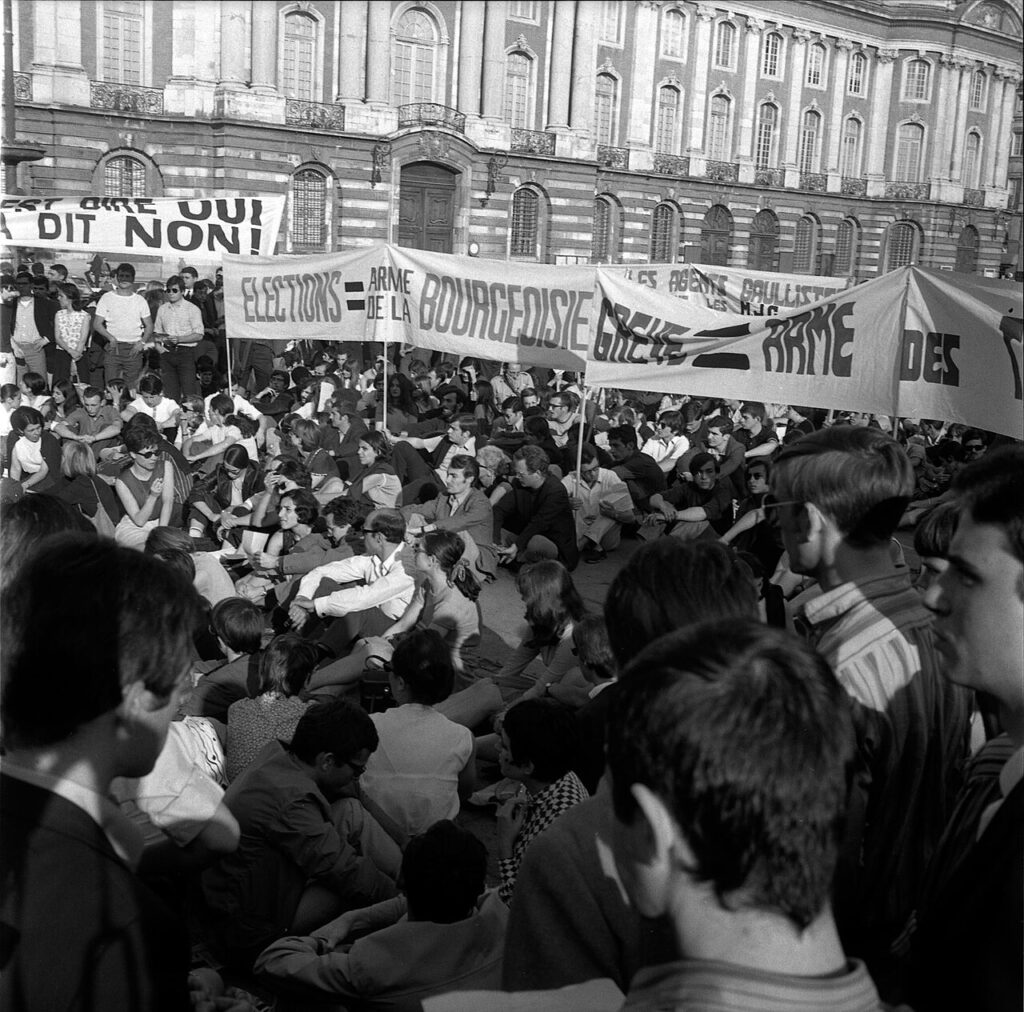
Even though sociologists sometimes say that “the youth” as a social category is a product of the 20th century, students and their protests have been a fixture of Western societies since the foundation of universities in the 12th century. Protesting students embody ethical rage and courage, as well as naivety. Their feverish activity usually peters out in the course of a year or so, which is what the powers that be usually count on.
This is not to say that student-led protest never achieves results. They can bring a society over a tipping point; they can keep alive hope in dark times. In short, they perform very relevant functions in the social body. Looking, however, at the results of the Serbian elections as the dawn of a new era, or trusting that the Trumpian government of Meloni in Italy will be negatively affected by the street protests, is a bit naive as well.
A true intergenerational alliance is what usually changes the game. This is, in fact, what is happening — at least in part — in both Italy and Serbia. In Italy, professors have been seen joining their students in an attempt to shelter them from unprovoked police attacks. In Serbia, professionals of different stripes have been on the ballots with the students. Whether such alliances will be backed up by more robust political structures remains to be seen.
I grew up in a world in which politics was a noble profession; I am getting older in one in which politics is a vile affair. There is an apocalyptic element in this, meaning that politics have likely always been corrupt to some extent but, in an era dominated by ideals, we could hardly become aware of that. At the same time, the ideal element is badly needed today, despite the awareness of corruption and manipulation. Students bring a powerful energy of clarity and idealism into a social body which is muddled, tired, and confused.
This week, a friend of mine said that a truly functioning democracy exists when people are in charge of their emotions. As long as they either repress or mindlessly follow their emotions, fascism will ensue. Another friend said that he is seeing the world as divided between conscious and mindless people — rather than between believers and unbelievers as he used to think. These are valid comments to me, pointing in the same direction.
I am more and more convinced that the growth in awareness of one’s feelings and their interaction with one’s thinking is the key to the survival of our species. Gaining awareness is, however, a very slow process for most people, while the issues seem urgent. I am somewhat comforted by the knowledge that revolutions in history have happened when a sufficient yet relatively small percentage of fired-up people could push the majority to leap.
As a consequence, however, such a leap is not deeply rooted in individuals. The convictions expressed might represent more the mood of an era than anything deeply held. I have witnessed how falling back from apparent awareness into muddled waters can happen. I have also witnessed stunning maturity with a clear grasp of issues where I did not expect it.
Our species developed very fast in the past few millennia. The differentiation between thinking and feeling — arguably one of our major achievements — is not finished. Complete separation (i.e. repression of feelings) or total identification (i.e. lack of thought) are recipes for disaster. A nice balanced interaction between the two should be our polar star.
The resurgence of the student archetype among us is to me a promise. It represents the passion and the ideal, feeling and thinking both on fire, energized for a better world. But it is up to people of all ages to form alliances and harness such energy for transformation.
Banner Image: St. Scholastica Day Riot, Oxford University, 1354. From a 1907 Oxford postcard. Public Domain, on Wikimedia Commons.
Queries for Contemplation
Do you feel the student archetype in yourself? How do you balance thinking and feeling? Do you know any actual student group or movement that you could engage?
Related Readings by Matthew Fox
Matthew Fox and Adam Bucko, Occupy Spirituality: A Radical Vision for a New Generation
Matthew Fox, Skylar Wilson, and Jen Listug, Order of the Sacred Earth: An Intergenerational Vision of Love and Action
Confessions: The Making of a Post-Denominational Priest
Charles Burack, ed., Matthew Fox: Essential Writings on Creation Spirituality
Meister Eckhart: A Mystic Warrior for Our Time
The Tao of Thomas Aquinas: Fierce Wisdom for Hard Times
Sheer Joy: Conversations with Thomas Aquinas on Creation Spirituality
The A.W.E. Project: Reinventing Education, Reinventing the Human


7 thoughts on “Students”
This DM touches on a crucial aspect of healthy human life: the importance of melting the icebergs of frozen feelings that most of us carry in our subconscious since childhood. Without that inner climate warming, we become puppets to those frozen feelings, our thinking becomes distorted, and we expect outer revolutions when the first revolution that should take place in an inner revolution. What we call “feelings” should better be called “emotions” to help us understand that they are “motions out of” ourselves, exits and exiles. Frozen feelings are exiles that have become permanent. Self-help/mutual-aid groups provide ideal environments for a painful but vital inner thaw.
As far as student protests are concerned, I respectfully see them as spasms of canaries in a mine. The so-called grown-ups have been busy mining data and retirement plans for a half-century after the inebriating glorious thirties, completely anesthetized and drunk on the vine of “consumerism.” Yet, in 1972, a landmark report was published titled “The Limits to Growth.” It was put down and scorned upon by the “bar tenders” of consumerism who, instead of heeding that wise warning, pushed growth on steroids.
The age of denial is over, and the canaries sense it. May their “tweets” be heard.
Hello Daniel. I always read and enjoy your thoughtful comments. One of mine: In Prescott, Arizona (my small town of about 45,000 of mostly older, retired people) our “No Kings” rallies have generally led to oversized crowds percentage-wise. Attendance tends to be 2.5 to 6.6 percent of our population. (This is Arizona’s most conservative county, and it’s not like Arizona itself is a liberal stronghold.) Many of these people, including pretty much all my local friends, have organized or attended anti-government policy rallies and pro-peace rallies since we were in our teens in the late 60s. I started protesting in my 30s when my son was born–including organizing myself one yearly peace walk in my former town on Mother’s Day. We have not all drunk the vine of consumerism. Sadly, our town is full of far too many old people like me. I miss kids. This is all to say that I wish we had lots more young people at our rallies. There are hardly any, which is especially weird since you’d think one of our three colleges, which focuses on women’s and environmental studies, would be full of progressive students. Just say’in. Here in Prescott, we seniors are getting really tired of carrying the weight of anti-MAGA protests.
Thank you Michelle. I was also among the canaries chirping in 1968. Alas, most became miners and quickly forgot.
Yes. Again we are witnessing the expression of perceived injustice.
Of course that should awaken the student archetype in all of us.
It begins with feeling or resulting emotion, then the attempt to understand.
Having lived long enough to see this over and over you might conclude that
humans really don’t understand justice. Or maybe we just can’t do it.
For me the student archetype spiritually represents part of the more wholistic archetype of the True Heart Self/Eternal Soul uniquely with-in all of Us which connects/interrelates Us with Our Source~Co-Creator’s Spirit of Evolving LOVING DIVERSE ONENESS of All Beautiful Sacred Creation/Cosmos, including All physical/nonphysical spiritual dimensions/Beings, in the Sacred Process of the ETERNAL PRESENT MOMENT…
To me, apocalyptic means a revelation in our collective consciousness, an unveiling. Today’s DM touches on it: politics was likely always corrupt, but the ideals we wove kept it veiled. Now that veil is lifting, and what was always there is being seen.
I know this unveiling from the inside. Patterns I carried for years without seeing them now surface into view, and when one does, it can take over startlingly fast and run its course. Later it seems absurd. Breath brings me back to center, and from there I can feel what surfaced without the story. Witnessed, it finds its coherence.
Maybe the collective needs the same. What is surfacing now can’t be pushed back under, and repression only buries it deeper. But reacting lets it run us. Witnessing together, without rushing to blame or to look away, may be how a people finds its center again.
That kind of witnessing needs what Gianluigi says students bring: clarity and idealism in a muddled, tired world. Perhaps that’s the student in each of us: eyes clear enough to see what’s revealed, and a heart still holding the ideal.
Unveiling isn’t only loss. The threads of the old veil are still ours. The ideal isn’t gone; it’s waiting to be rewoven with clearer eyes, by young and old hands together.
“Both and…”