
As a child, there were two main places of pilgrimage where I went,accompanied by adults. These two were the Sanctuary of the Black Madonna on the outskirts of the village of Oropa, and the Sacred Abbey of St. Michael the Archangel, set on top of Mount Pirichiano. From my house, all I knew was that, at a certain point, the first destination meant turning left and the second meant turning right. They both distanced about 90 minutes from home.
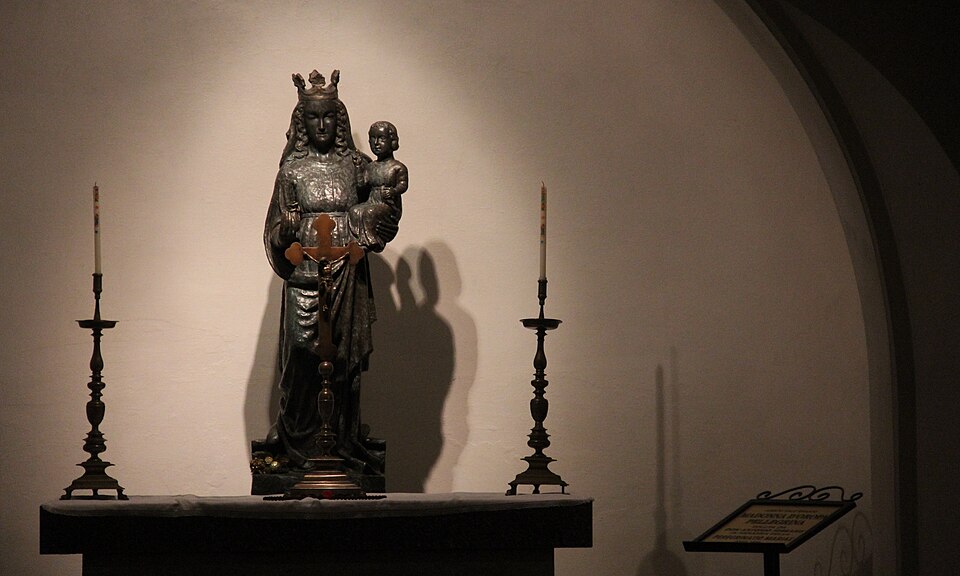
As I know now, these two destinations have been for centuries the main places of pilgrimage for everybody in the Graian Alps — a subset of the Italian Alps at the border with France. I have learned also that people used to reach these two places by foot, which I would have found extraordinary as a child, but even now I think it’s quite a feat. Steep paths and many walking days — in fact, pilgrims’ hostels were thriving on both routes.
The Camino de Santiago in Spain — which became popular a few decades ago — is in fact is a major but not unique example of a spiritual practice which was very common in the Middle Ages. Today, all over Western Europe, people are rediscovering the physical, mental, and spiritual benefits of traveling by foot through a variety of such paths which are being rediscovered and mapped.
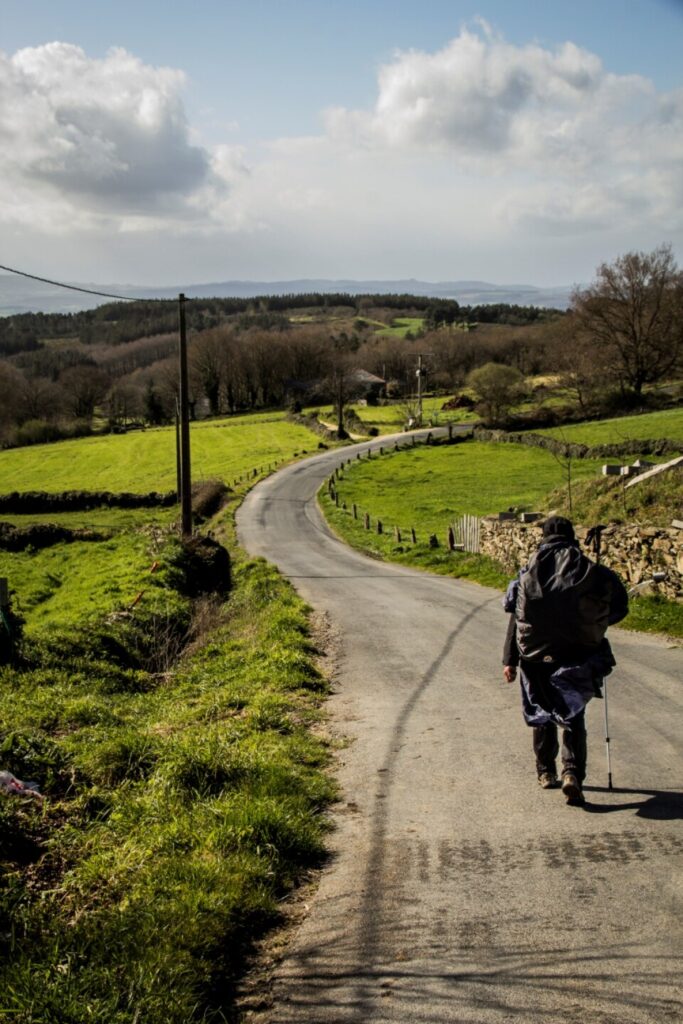
I kept visiting these two places — the sanctuaries of the Black Madonna and the Archangel Michael — in my teenage years and as a adult. Now I was asking myself what brought people there throughout the centuries. What thoughts and feelings did they have? Did they meant to expiate some ill-doings? Or were they looking for solace? Perhaps they met with old and wise spiritual counselors, or they simply enjoyed being immersed in the intense sacred atmosphere.
As it goes, my unconscious recently suggested to me to organize a retreat based on these two places. I was thinking that I wanted to work with people on gender on a spiritual level — meaning essentially for me the anima and animus concepts as developed by C.G. Jung and made alive again for me by Matthew Fox’s reframing of them — and these two places simply imposed their force on me. In fact, I feel very strongly now that each of them is dedicated to one of the two poles on the symbolic gender spectrum.
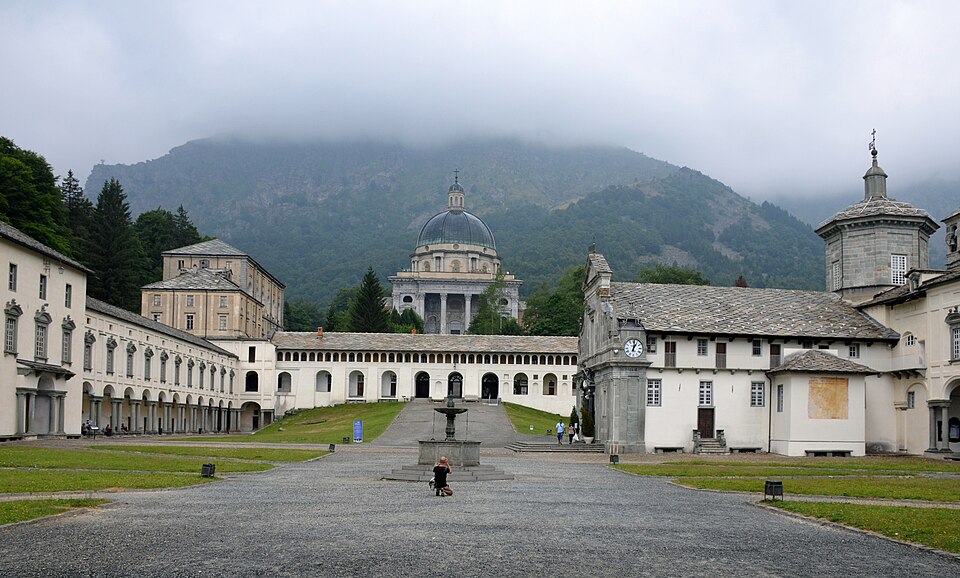
Anima, the sanctuary of the Black Madonna in Oropa, is steeped in the energy of the earth and the waters. It is built around the geometry of the circle and the square. The outer courtyard and the inner courtyard surround the ancient basilica which contains the 12th-century statue of the Black Madonna — even though the worship around her is much older.
There is also the element of the ascent in Oropa — after all it is a mountain sanctuary — but it seems very much tied to the energy of the black fertile earth. On a recent visit, I felt pulled down, almost called to identify with the rocks. A great fountain of holy waters — not for display of water figures, but for the pilgrims to drink from — is at the very center of the
inner courtyard, before the entrance to the basilica.
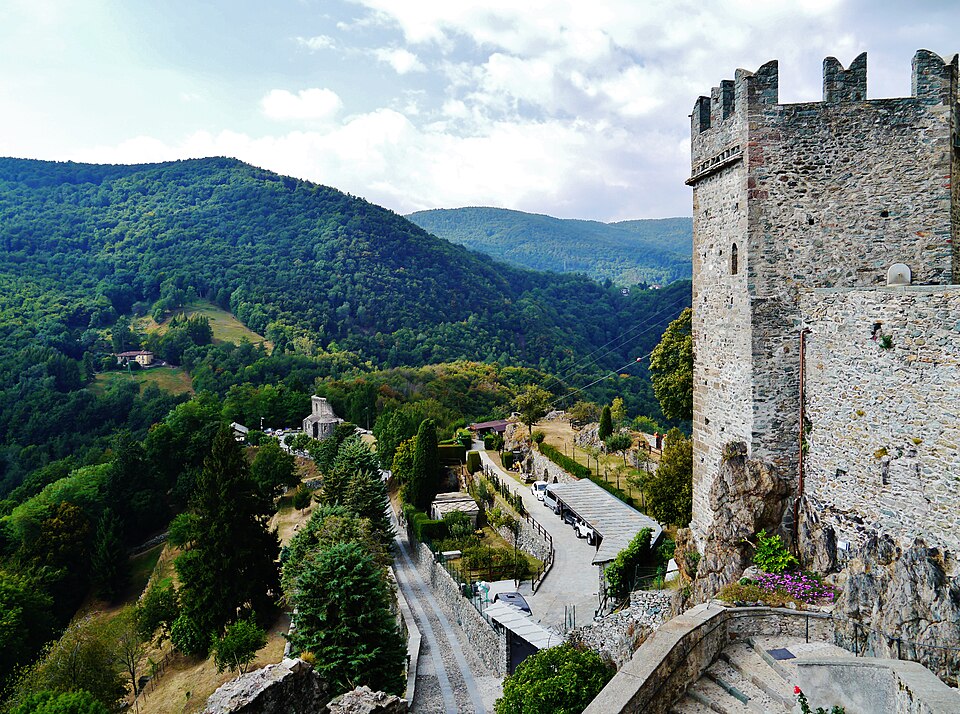
Animus, the abbey of St. Michael, seems flying suspended in the sky, replete with the energy of the winds. Built around the geometry of the triangle, its main church seems almost to stand on top of an isosceles triangle with its apex pointing into the sky. Legends tell that this was a sacred place from times immemorial.
The ascent is — without a doubt — the main spiritual meaning for those who take on a pilgrimage to this abbey. A very large staircase, encased into cyclopic walls, leads the visitor to a stone portal called “the Zodiac” filled with ancient symbols, and then to the upper place of worship, from which the panorama on the Alps and the whole valley is simply amazing.
As a kid, I knew that these two places were filled with energy for me. I anticipated each visit and reeled in the energy itself afterwards. Little did I know that, as an adult, I would bring people from different countries to visit them and even to stay at them as “real pilgrims.”
Although I have accompanied American students to these two places before the 2027 pilgrimage which we have announced, it is the first time that I am developing with an amazing staff of people a series of seven workshops which, together with the visits and the sacredness itself of the sanctuaries, are intended as a facilitation for the inner journey of each participant.
As we write in our proposal for the pilgrimage, in our view the Black Madonna and Michael are not simply representations of “woman” and “man”… these are archetypal forces that live within us all. The beauty, spaciousness, and energy of the sites where we will breathe, meditate, dance, think, and live for eight days will be there to help our interior work to take place.
You can get more info about this June 2027 retreat/pilgrimage here: ……… and you can always write to Gianluigi with any unanswered questions at gianluigi@misticaevolutiva.it
Banner image: Composite image of the Abbey of St. Michael in Italy, and the Black Madonna of Oropa, by team member Rosanna Tufts: Black Madonna. Oropa, Italy. Photo by Mattis. Wikimedia Commons; Sacra di San Michele viewed from the bottom of the stairs. (Note the angel at bottom left.) Photo by Marie-Lan Taÿ Pamart. Wikimedia Commons.
Queries for Contemplation
Are there sacred places or sanctuaries or pilgrimages which have transformed you? In what ways?
Related Reading by Matthew Fox
The Physics of Angels: Exploring the Realm Where Science & Spirit Meet
Christian Mystics: 365 Readings & Meditations
Creativity: Where the Divine and Human Meet
Hildegard of Bingen, A Saint for Our Times: Unleashing Her Power in the 21st Century


