
The recent victory of Luiz Inacio da Silva (Lula) in Brazil marks the first time that the winner of the presidential runoff is the candidate who came off as second in the first round. Grassroots mobilization on the left has been huge and effective: the runoff voter turnout — around 81% — is stunning.
.
It is amazing that a man born in utter poverty has become the most relevant political figure of the first quarter of the 21st century in Brazil, growing from union leader to the presidency — with three terms under his belt already. His passion and charisma, his utter dedication to the downtrodden, and his deep honesty shine today even more than yesterday.
Lula is internationally recognized as the statesman who brought Brazil out of poverty and placed it on the world scene as a major political actor. He is also seen as a champion of LGBT+ and indigenous rights, as well as a defender of the Amazon forest. All accusations against him have been found ungrounded. Yet the risk of Brazil falling again into the rapacious hands of the Bolsonaro family was real until a few days ago, as if the disastrous presidency of Jair Bolsonaro (2019-2023) was not enough. Why is that the case?
The socialist Lula of the 1970s is not the same Lula who governed Brazil for most of this first quarter century. Before being elected president for the first time in 2002, he vented the possibility that Brazil would not repay its international debt. Corporations feared him. Right after that election, he became a moderate regarding financial policies and the role of the private sector in the economy. At some point, even his environmentalism seemed to falter under pressure.
All the same, throughout the years, he implemented very successful programs to lift the Brazilian poor out of their plight through education, direct financial help, and public health reforms. In sum, he accepted many compromises with the neoliberal world order to obtain the outstanding economic and social results that he did.
Flavio Bolsonaro’s domestic policy: going back to the classist society of the dictatorship (1964-1985). His international policy: gifting Brazil’s natural resources to Trump. Yet many millions of Brazilians are under his spell. We have seen the same phenomenon in the USA. People are voting against their own self-interest with a dedication and a fury that are completely disconcerting to an external observer. False information widely circulating on social media is partly responsible for this phenomenon, but the presence and activity of evil archetypes bubbling up from the collective unconscious must be invoked as well (see DM October 24).
In the past, neoliberalism’s calls for deregulation did not aim directly at the complete destruction of state, society, and environment. Shrewd capitalists knew that to make a profit one needs those three things in place, even if under strict control. Our era is dominated instead by a death wish of enormous proportions which Bolsonaro and Trump embody in totally unconscious ways. Lula’s fourth election as president of Brazil puts a clear stop sign before such a death wish.
It was very astute of Lula to run again. It is very unlikely that anybody else could have snatched this kind of victory. But he can’t defer his retirement for ever. Very consciously, he bought time for his society to wake up.
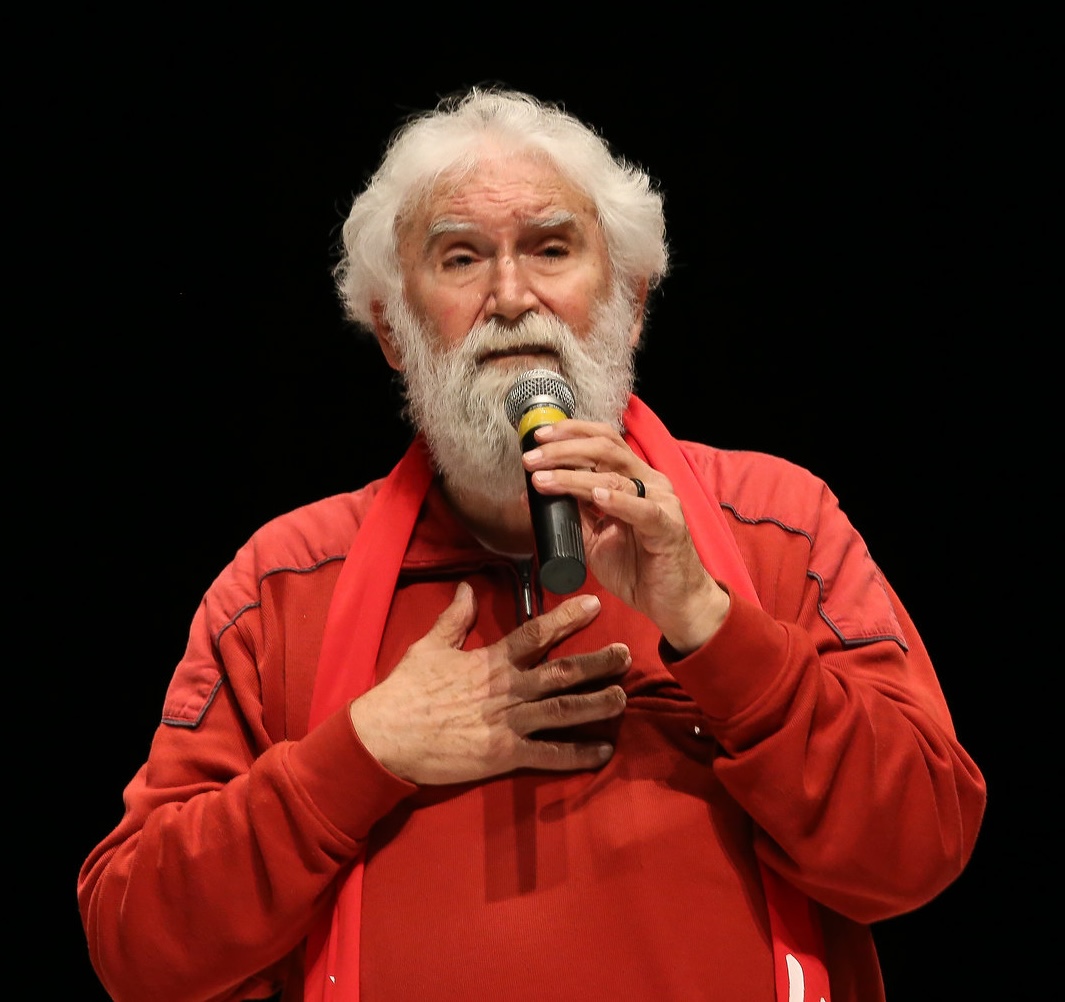
In all of this, the role of evangelical churches is disgusting but consequential. Most of them were founded in the 1980s to swing Brazilian society away from the influence that liberation theology was having on the population — with many millions of dollars pumped in from the USA. Last week, leading liberation theologian Leonardo Boff expressed his strong and unequivocal support for Lula, while the Roman Catholic archbishop of Brasilia appeared instead to support Bolsonaro — just like the twelve bishops who recently wandered into the Oval Office unaware.
Lula’s charisma cannot keep in check the forces of rage and illusion forever, but for a time it will.
Banner Image: President Luiz Inácio Lula da Silva, during a campaign event in Porto Alegre, October 2026. Photo: Ricardo Stuckert, Lula Oficial, on Flickr
Queries for Contemplation
How important is it for your spirituality to keep in touch with situations and voices from other countries?
Related Readings by Matthew Fox
Occupy Spirituality: A Radical Vision for a New Generation
Creation Spirituality: Liberating Gifts for the Peoples of the Earth
TRUMP AND THE MAGA MOVEMENT AS ANTICHRIST: Recognizing the Archetype of Evil in Our Time
The Tao of Thomas Aquinas: Fierce Wisdom for Hard Times
Julian of Norwich: Wisdom in a Time of Pandemic–and Beyond
Order of the Sacred Earth: An Intergenerational Vision of Love and Action
Meister Eckhart: A Mystic Warrior for Our Time
The Hidden Spirituality of Men: Ten Metaphors to Awaken the Sacred Masculine
A Spirituality Named Compassion: Uniting Mystical Awareness with Social Justice
